TLDR
Every new car should be inspected, cleaned and properly prepared before paint protection film is installed. Full paint correction is not automatically necessary. If the paint has light marring or visible swirl marks, a limited polish may improve the finish before it is covered. Deeper scratches, chips and prior repairs may require a different remedy—or may need to be accepted as existing imperfections. Ask the installer to separate required PPF preparation from optional appearance correction on the quote.
If you searched for “paint correction before PPF new car,” the most useful answer is condition first, not package first. New paint can look excellent, or it can arrive with residue, bonded contamination, light wash marks, scratches, chips or evidence of prior work. None of those conditions should be assumed, but each is worth checking under suitable lighting before the film goes on.
The goal is not to chase a flawless finish by default. It is to make the surface suitable for film and then decide how much cosmetic refinement is justified by the actual paint, the planned coverage and your expectations.
Does every new car need paint correction before PPF?
No. Every vehicle needs appropriate surface preparation, but paint correction is an abrasive refinement process rather than another name for cleaning. Compounding and polishing remove or refine a small amount of the upper paint surface to reduce visible defects. That makes correction condition-dependent work, not a universal prerequisite for PPF.
A new vehicle with clean, defect-free paint may need only the preparation required for a sound installation. Another new vehicle may benefit from a light polish on selected panels. A third may have a chip or scratch that polishing cannot responsibly solve. The inspection should determine which situation applies.
This distinction also keeps the estimate useful. “Prep included” should not quietly mean an undefined correction package, and “paint correction recommended” should come with an explanation of the defects found, the panels affected and the intended result.
Inspect the paint before choosing the correction scope
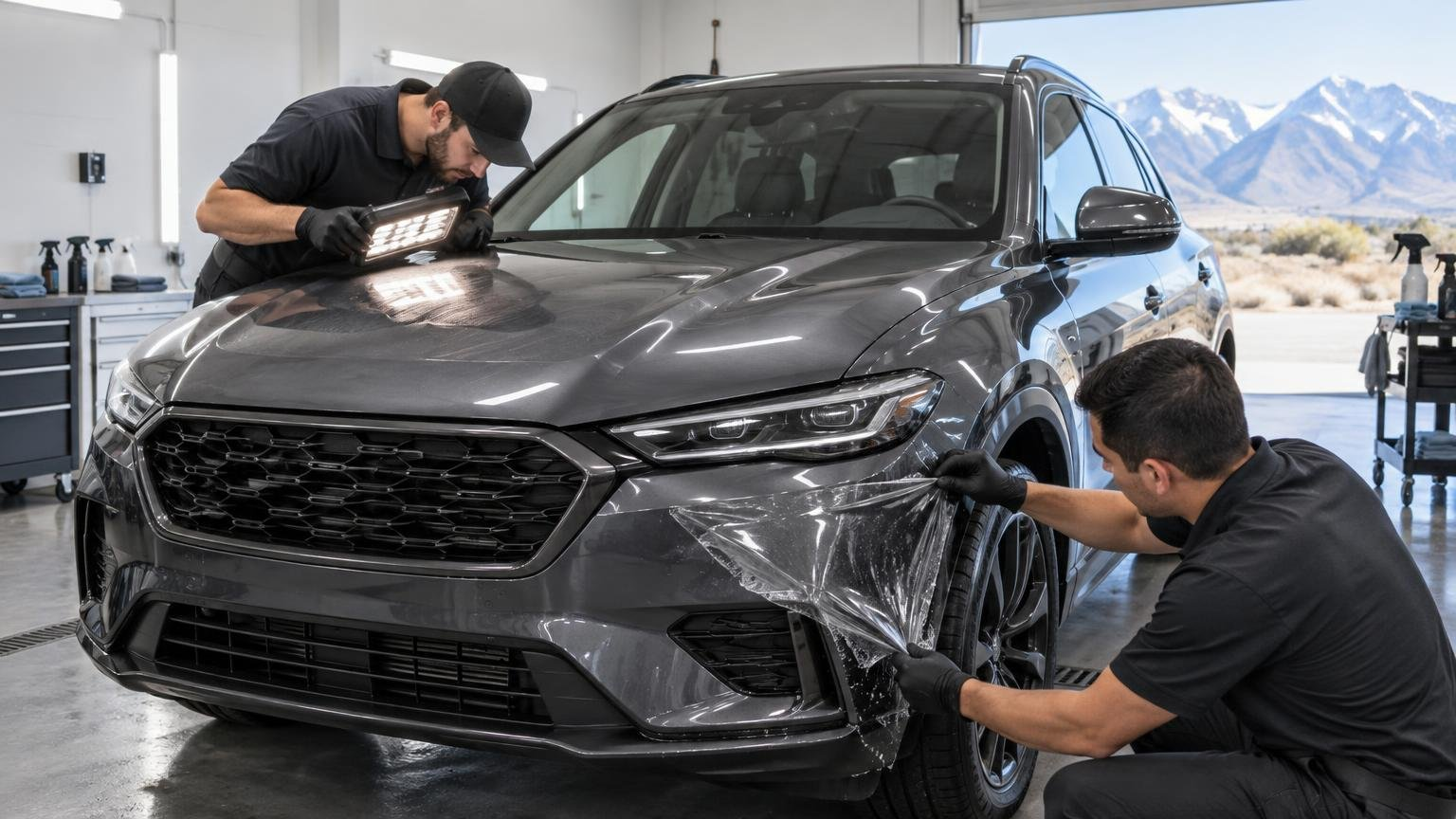
Inspect the vehicle while it is clean and before approving polishing. Diffused daylight and focused inspection lighting can reveal different problems. Look across the paint from more than one angle rather than judging it only under showroom lighting.
The inspection should consider:
- Light swirl marks, haze or wash marring that affects gloss under direct light.
- Isolated scratches, including whether they appear superficial or too deep for routine polishing.
- Rock chips or edge damage that may need touch-up, repair or acceptance rather than correction.
- Wax, sealant, grease, adhesive residue or other material that could interfere with surface preparation.
- Bonded contamination that remains after an ordinary wash.
- Differences in texture, color or finish that may justify asking about previous repair or refinishing.
- An existing ceramic coating on panels scheduled to receive PPF.
- Matte, satin, frozen or other specialty paint that requires finish-specific guidance rather than conventional polishing assumptions.
These are inspection points, not a claim that new cars inevitably arrive damaged. If a concern is found, document it with photos and identify whether it is inside the proposed coverage area. A mark on an uncovered rear quarter does not necessarily need to expand a full-front project into whole-car correction.
Preparation and paint correction are different jobs
Baseline PPF preparation is about producing a clean surface suitable for installation. Manufacturer guidance supports removing materials such as wax, oils, tar, polish residue, fingerprints, adhesive residue and grease, followed by a final surface inspection. 3M’s paint protection film installation guidance provides an example of these preparation requirements. XPEL similarly describes panel preparation in terms of removing waxes, oils and contaminants.
Paint correction has a different purpose: improving appearance by mechanically refining defects. A wash or decontamination step can remove material sitting on the paint, but it does not automatically remove a scratch in the paint. Conversely, aggressive polishing should not be used merely because the vehicle is about to receive film.
| Service level | Primary purpose | When it may fit |
|---|---|---|
| Cleaning and decontamination | Remove surface residue and contamination before installation | Baseline preparation, with the exact process determined by the surface condition and film instructions |
| Targeted or light polish | Improve minor marring, haze or isolated appearance issues | Paint has correctable defects and the owner wants better gloss before those panels are covered |
| Broader correction | Refine more extensive correctable defects across multiple panels | Inspection finds widespread issues and the expected appearance justifies the added work |
| Touch-up or repair evaluation | Address chips, deep scratches or damage beyond routine polishing | The defect cannot be safely or acceptably resolved through polishing alone |
Ask what each quoted line item accomplishes. A vague “full correction” label does not tell you whether the shop plans a light enhancement, targeted defect removal or multiple abrasive stages. The intended result and the limits of the work matter more than the package name.
When a light polish may be worthwhile
A light polish can make sense when the inspection finds minor haze or marring that is visible enough to bother you, especially on dark paint or large, highly visible panels. It may also be reasonable when you are paying to protect most of the vehicle and want a more consistent starting appearance.
The decision should still be proportional. If the marks are visible only under intense inspection lighting and this is a high-mileage Utah commuter, maximizing practical protection may matter more than pursuing a show-car finish. If it is a specialty vehicle with dark paint and demanding appearance goals, refinement may carry more value.
Do not approve a one-step polish simply because the label sounds appropriate for a new car. “One step” describes a process category, not a guaranteed outcome. Ask which defects it is expected to improve, which panels need it and what will likely remain visible.
When polishing is not the complete answer
Deeper scratches and chips may be beyond what polishing can safely remove. Depending on the defect, the choices may include touch-up, professional repair, refinishing or leaving it as-is. Manufacturer information on scratch removal also distinguishes between defects that can be refined and damage requiring more involved repair.
Paint protection film should not be treated as paint repair. Utah PPF notes that existing chips and scratches can remain visible beneath film unless they are addressed beforehand. Film may change how a small defect looks from certain angles, but that is not a reliable correction strategy.
Recently repainted panels require another conversation. The repair facility, paint manufacturer and installer may have requirements affecting cure time and film application. Specialty matte or satin finishes also need finish-specific handling because conventional polishing can alter their appearance. Do not apply a standard glossy-paint correction plan to those surfaces.
Address ceramic coating before installation
Tell the installer if the vehicle has already received a ceramic coating, dealer-applied protection product or unknown paint treatment. 3M’s installation guideline states that ceramic coating should not be present on paint receiving its PPF. The appropriate removal and verification process should be determined before installation rather than discovered after adhesion problems occur.
This is another reason to distinguish preparation from correction. Removing or addressing an incompatible surface treatment is installation preparation; it does not necessarily mean the entire vehicle needs cosmetic correction.
Let the PPF coverage influence—not dictate—the decision
Correction should usually be evaluated at least across every panel receiving film. The broader the coverage, the more paint will be placed beneath PPF and the more important it becomes to agree on the desired starting finish.
For a practical full-front PPF package, inspect the bumper, full hood, full front fenders, mirror caps and any other included surfaces according to the actual coverage map. The priority is addressing preparation needs and visible defects in that protected zone. There is no automatic reason to correct unrelated panels unless you also want their appearance improved.
With full-body PPF, expectations may be higher because most painted surfaces will be covered. A broader inspection and appearance discussion are sensible, but full-body coverage still does not prove that multi-stage correction is necessary. Excellent paint should not receive unnecessary abrasive work simply to make the invoice look complete.
If budget is limited, allocate it according to the vehicle’s use. A Utah daily driver facing freeway construction, canyon trips or winter grime may gain more practical value from suitable impact-area coverage than from extensive correction of faint marks. The broader Utah paint protection film guide can help you match coverage to road exposure.
How to compare the quote
Ask for an itemized estimate that keeps installation preparation, cosmetic correction and paint repair separate. Utah PPF presents paint condition, decontamination, correction and chip repair as variables that can affect a project rather than fixed universal requirements. Its quote process also requests information such as vehicle condition, desired coverage, photos and timing.
Before approving the work, ask:
- What did the inspection find, and can I see the defects under the same lighting?
- Which cleaning and decontamination steps are included in the PPF installation price?
- Which panels need polishing, and why?
- Is the recommendation targeted polishing, a general enhancement or deeper correction?
- What result is realistic, and which marks, chips or repairs will remain visible?
- Does the vehicle have a coating or surface treatment that must be addressed?
- Are chip repair, touch-up or refinishing separate from paint correction?
- Will the correction scope change if I choose full-front instead of full-body coverage?
- What is the total price for the same film, coverage map, preparation and correction scope?
If you are comparing shops, normalize these answers before comparing the totals. Two estimates are not equivalent when one includes decontamination and targeted polishing while the other lists only film installation. Use a line-by-line PPF quote comparison to identify what each price actually covers.
A sensible decision rule
Start with inspection and required surface preparation. Add correction only when a visible, correctable condition and your appearance expectations justify it. Escalate chips, deep scratches, prior repairs and specialty finishes to the appropriate repair or finish-specific discussion rather than assuming more polishing is the answer.
For most new-car owners, the right question is not “Which correction package always goes with PPF?” It is “What does this paint need before these specific panels are protected?” Get that answer documented, confirm what may remain visible and then choose the smallest responsible scope that delivers the finish you want.
References
- 3M Compounds & Polishes | 3M United States
- 3M™ Scratch Removal System 39071, 4 /Case | 3M United States
- 3M™ Paint Protection Film Installation Guideline
- 3M™ Surface Preparation System
- Panel Prep Spray – Surface Cleaning Made Easy | XPEL
- Clear Bra Utah – Utah PPF
- Home – Utah PPF
- How Much Does PPF Cost In Utah? – Utah PPF
- Contact Us – Utah PPF