TLDR
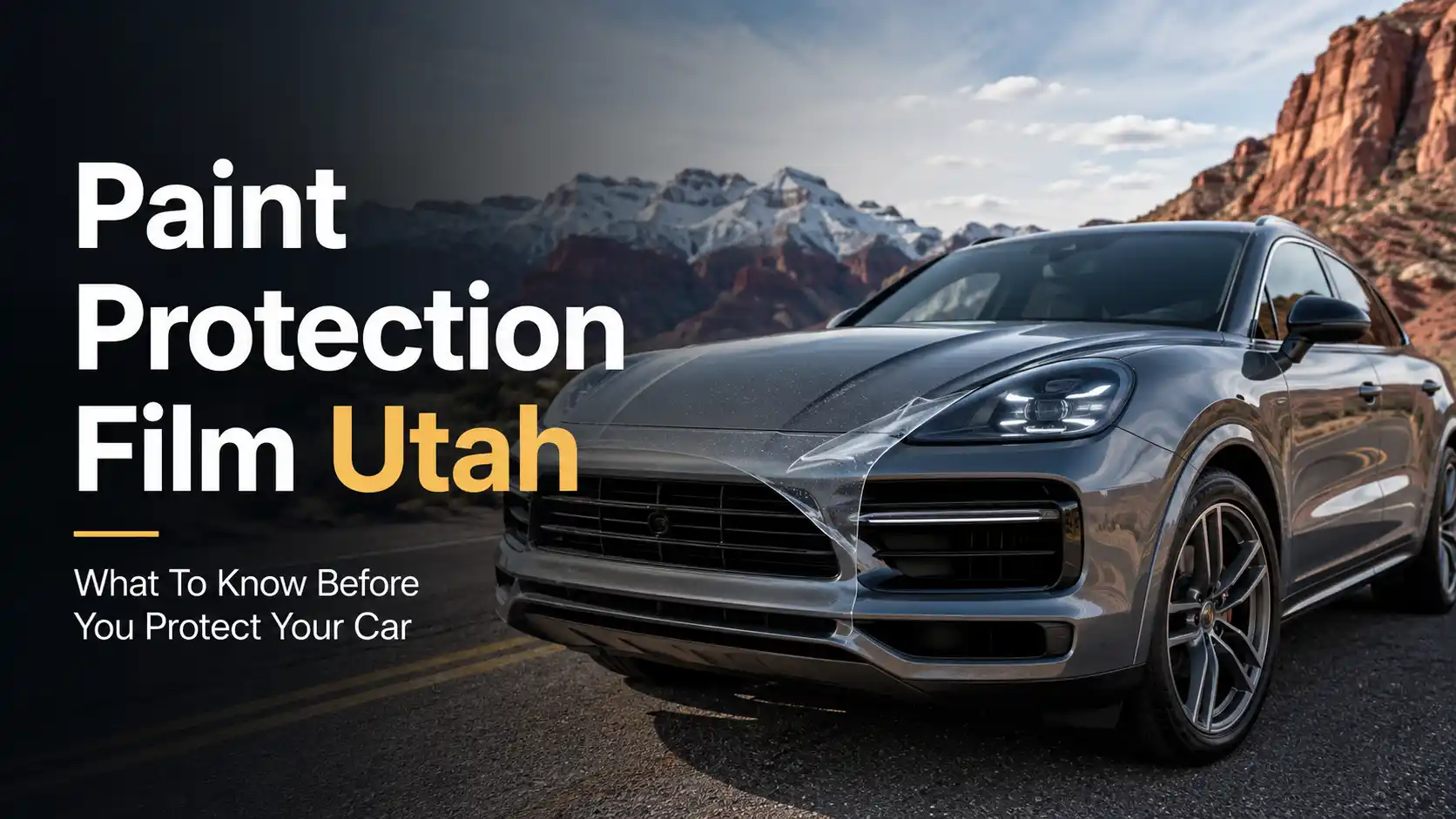
Paint protection film, often called PPF or clear bra, is a clear protective film installed over vulnerable painted areas of a vehicle.
For Utah drivers, PPF is especially useful because freeway debris, canyon driving, winter road treatments, gravel, construction zones and mountain trips can all be hard on paint.
The best coverage depends on how you drive. Many owners start with partial front or full front PPF, while full body PPF makes more sense for luxury vehicles, matte finishes, off-road vehicles and long-term ownership.
PPF helps protect against rock chips, scratches, bug acids, road grime and weathering, but it does not make a vehicle damage-proof. Installation quality, film quality and proper prep matter.
Why Paint Protection Film Matters In Utah
Paint protection film Utah searches usually come from people who have already seen what local roads can do to a vehicle. Maybe your front bumper is sandblasted from I-15. Maybe your hood picked up chips after one canyon drive. Maybe you just bought a new truck, Tesla, SUV or weekend car and want to protect the paint before Utah roads get the first vote.
That is the right time to think about PPF. Paint protection film is a clear, durable urethane film installed over painted surfaces to help absorb the daily abuse that would otherwise hit the paint directly. It is most commonly installed on the front bumper, hood, front fenders, mirrors, rocker panels and other high-impact areas.
In Utah, that protection matters because driving conditions change quickly. A vehicle might see freeway commuting during the week, canyon roads on the weekend, winter brine and grit in the colder months, plus gravel and construction debris during the warmer months. None of those conditions are unusual here. They are just normal driving.
PPF gives the paint a sacrificial layer. Instead of every small impact, bug stain or light scratch landing directly on the clear coat, the film takes the wear first.
What PPF Actually Does
PPF is designed to protect painted surfaces from common road damage. It is not the same as wax, ceramic coating or a vinyl wrap.
A ceramic coating is a liquid coating that can make the surface easier to clean and more resistant to light contamination. It does not provide the same physical impact protection as film. A vinyl wrap changes the look of the vehicle and can offer some surface coverage, but it is usually chosen for appearance, color change or graphics. Paint protection film is chosen primarily for protection.
A good PPF installation can help protect against:
- Rock chips from freeway debris, gravel roads and vehicles ahead of you
- Light scratches from washing, brushing against the surface or daily use
- Bug acids that can stain or etch exposed paint
- Road grime from winter driving, canyon routes and construction zones
- Salt, grit and cinders from treated roads during snow season
- Premature wear on high-impact painted areas
Modern premium films are also commonly self-healing, which means minor swirl marks and light surface scratches can reduce or disappear with heat. That does not mean PPF repairs deep cuts or heavy impacts. It means the top surface of the film is designed to recover from small surface-level marks.
This is where expectations matter. PPF is excellent protection, but it is not armor. A large rock, sharp metal object or hard impact can still damage the film and sometimes the paint underneath. The difference is that many everyday impacts hit the film instead of going straight into the paint.
The Best Areas To Protect First
The right PPF coverage depends on your vehicle, budget and how you drive. Most people do not need to start with full body film. For many Utah drivers, the best first step is protecting the areas that take the most abuse.
Partial Front PPF
Partial front PPF usually covers the front bumper, partial hood, partial fenders and mirrors. This is often the lower-cost entry point.
It can make sense if you want basic protection, mostly drive around town or are trying to control the budget. The tradeoff is that the film edge may sit partway up the hood and fenders. On some vehicles and colors, that edge is subtle. On others, it may be more noticeable over time.
Full Front PPF
Full front PPF usually covers the full front bumper, full hood, full front fenders and mirrors. This is one of the most popular choices because it protects the main impact zone without wrapping the entire vehicle.
For Utah driving, full front PPF is often the best balance. It protects the painted areas most likely to get hit by rocks and road debris, especially during freeway driving, canyon driving and winter road conditions. It also avoids the partial hood line that comes with many entry-level packages.
Track Or High-Impact PPF
Some vehicles need more than standard full front coverage. Track packages or high-impact packages may add rocker panels, lower doors, rear wheel impact areas, A-pillars or other vulnerable spots.
This can make sense for performance cars, off-road vehicles, trucks, SUVs and vehicles with wide tires that throw debris along the lower body. It is also useful for drivers who spend a lot of time in canyons, on rural roads or near construction and gravel.
Full Body PPF
Full body PPF covers most or all painted panels. It is the most expensive option, but it also provides the most complete protection.
Full body PPF makes the most sense for high-value vehicles, matte paint, luxury cars, exotic cars, collector vehicles, off-road builds and owners who want the whole vehicle protected as evenly as possible. It can also be a smart choice for people who plan to keep a vehicle for a long time and want to preserve the paint as much as possible.
For many daily drivers, full front or high-impact coverage is enough. For special vehicles, full body PPF may be worth the extra cost.
Why Installation Quality Matters
With paint protection film, the material matters, but the installer matters just as much.
A premium film installed poorly will not look premium. Clean prep, accurate patterns, careful stretching, proper alignment and good edge work all affect the final result. PPF should look clean and intentional, not rushed or bulky.
Good installation usually includes careful washing, decontamination and panel prep before the film is installed. If the vehicle has existing paint chips, scratches or contamination, those issues may still be visible under the film. PPF protects the condition underneath it. It does not magically reset damaged paint.
That is why new vehicles are often the best candidates for PPF. The cleaner the paint is before installation, the better the finished result can look.
Used vehicles can still be great candidates, but they may need additional prep. In some cases, paint correction or chip repair should be discussed before film installation. This is especially true on dark colors, gloss black trim and high-end vehicles where small imperfections are easier to see.
Gloss, Matte And Finish Choices
Most PPF is clear gloss film, designed to preserve the look of factory gloss paint. On a properly installed vehicle, gloss PPF should be difficult to notice from a normal viewing distance.
Matte PPF is different. It can be used to protect factory matte paint, satin paint or a matte/satin wrap-like finish. It can also change the appearance of gloss paint by giving it a satin or matte look.
The finish choice matters because matte and gloss surfaces are maintained differently. Gloss film is usually easier for most owners because it matches the most common factory paint finishes. Matte film requires more care because uneven polishing, aggressive rubbing or certain products can create shiny spots.
If the vehicle already has matte paint, matte PPF is usually the better fit. If the vehicle has gloss paint and you want to keep the factory appearance, gloss PPF is usually the cleaner choice.
What To Know Before Requesting A Quote
A good PPF quote needs more than “How much for my car?” The vehicle, coverage area and paint condition all affect the price.
Before requesting a quote, it helps to know:
- Vehicle year, make and model
- Desired coverage, such as partial front, full front, high-impact or full body
- Paint finish, especially gloss, matte or satin
- Vehicle condition, including new, used, repainted or already chipped
- Driving habits, such as freeway commuting, canyon driving, off-roading or ski trips
- Timeline, especially if the vehicle is new or you want protection before a road trip
The more specific the request, the more useful the quote will be.
For example, “2024 Tesla Model Y, full front PPF, gloss paint, new vehicle, mostly I-15 commuting” gives the installer enough context to recommend a sensible package. “Need PPF price” usually leads to more back-and-forth.
If you are unsure, that is fine too. A good PPF shop should be able to help you compare coverage options without making the process feel confusing.
How To Choose The Right PPF Package
The easiest way to choose is to match the package to the risk.
Choose partial front PPF if you want basic front-end protection at a lower starting cost.
Choose full front PPF if you want the most common high-impact areas protected with a cleaner hood and fender finish.
Choose track or high-impact PPF if you drive aggressively, take canyon roads often, have wide tires, drive a truck or SUV or use the vehicle around gravel and debris.
Choose full body PPF if the vehicle is high value, matte, exotic, frequently off-roaded or something you plan to keep in excellent condition for years.
For most Utah drivers, full front PPF is the best starting point. It protects the areas that usually get hit first and it gives a clean, complete front-end result. From there, rocker panels, lower doors and rear impact areas can be added when the vehicle or driving habits justify it.
PPF Is Best Installed Before The Damage Happens
PPF can still be useful after a vehicle has some wear, but the best time to install it is before the front end is covered in chips. Once paint is chipped, the film can protect against future damage, but it cannot undo what already happened.
That matters in Utah because damage can happen quickly. One winter of commuting, one construction-heavy freeway season or one gravel-filled canyon trip can leave visible marks on exposed paint.
If you are buying a new vehicle, the best window is early. Get the film installed while the paint is still clean and before repeated road exposure adds chips, stains and scratches.
If the vehicle is already used, have the paint inspected first. You may still be a strong candidate for PPF, but the right prep plan matters.
FAQs
Is Paint Protection Film Worth It In Utah?
For many Utah drivers, yes. PPF is especially worth considering if you drive on freeways, canyon roads, gravel roads, construction-heavy routes or winter-treated roads. It is also a smart option for new vehicles, luxury vehicles, matte paint, trucks, SUVs and vehicles you plan to keep long term.
Is PPF The Same As Clear Bra?
Yes, in most cases. Clear bra is an older common term for paint protection film, especially when referring to front-end coverage. PPF is the broader modern term and can refer to partial front, full front, high-impact or full body coverage.
Does PPF Stop Rock Chips?
PPF helps reduce rock chip damage by adding a durable protective layer over the paint. It does not make the vehicle completely immune to damage, but it can prevent many small impacts from reaching the paint directly.
Should I Get PPF Or Ceramic Coating?
Choose PPF if your main concern is rock chips, road debris and physical impact protection. Choose ceramic coating if your main concern is easier washing, gloss and surface slickness. Many owners use both: PPF for impact protection and ceramic coating over the vehicle or film for easier maintenance.
How Long Does PPF Last?
High-quality films are often backed by long manufacturer warranties, commonly around 10 years depending on the product and warranty terms. Actual lifespan depends on film quality, installation quality, sun exposure, maintenance, driving conditions and how the vehicle is stored.
Can PPF Be Removed?
Yes, PPF can usually be removed by a professional. Removal is typically easier when the film is still in good condition and has not been left on far beyond its useful life. A professional installer can also replace individual sections if the film is damaged.