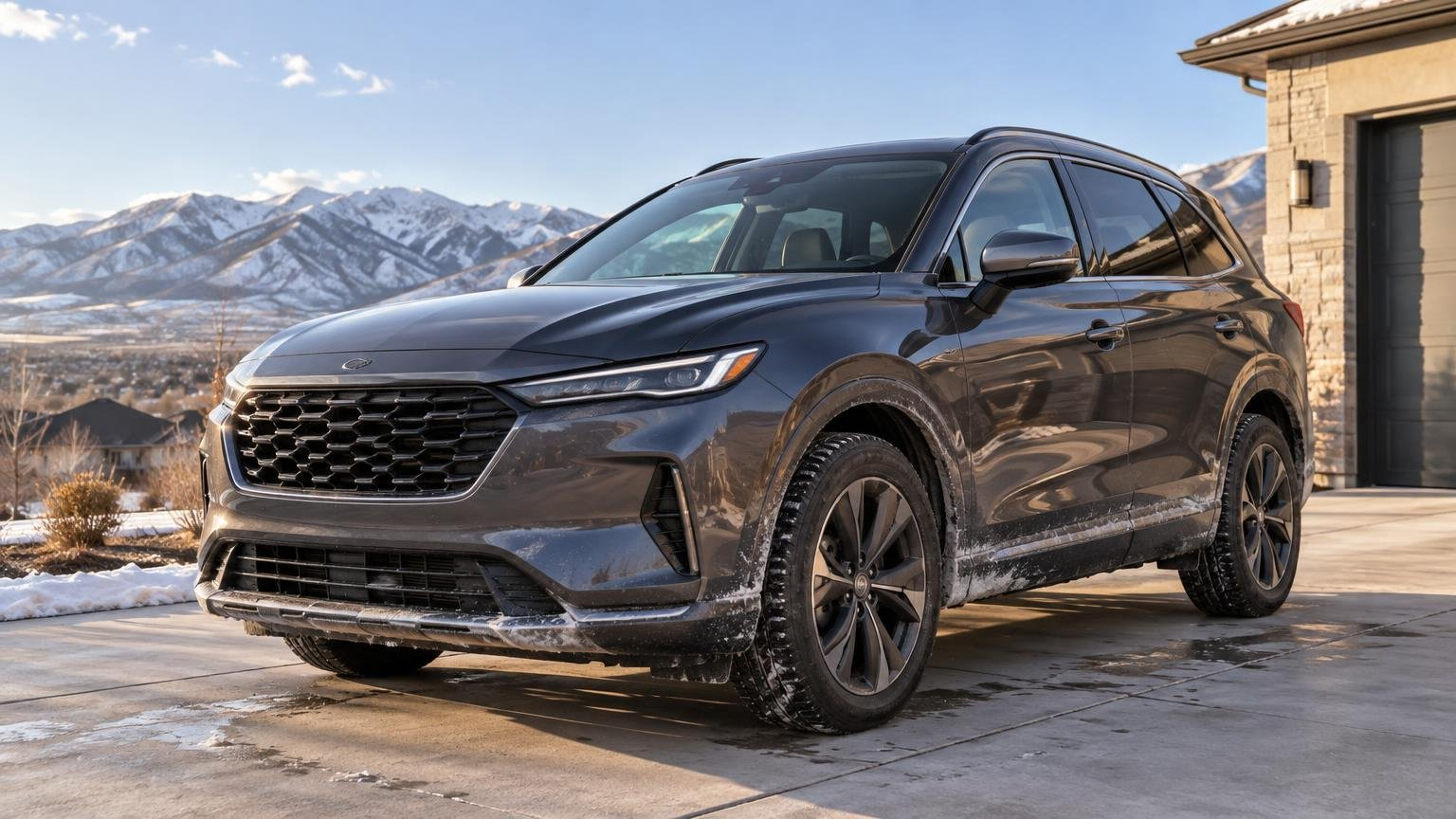
TLDR: For drivers researching PPF outdoor parking Utah, the practical answer is yes—paint protection film can still make sense. It places a sacrificial barrier over covered paint, helping with smaller debris strikes, light abrasion, bug residue, stains, and road wear. Outdoor parking does not make PPF maintenance-free, however. Sun, dust, tree residue, sprinkler spots, winter grime, and temperature changes make regular washing and inspection more important.
The decision should depend less on whether the car sleeps in a garage and more on which panels take physical abuse. A vehicle parked outside but driven only occasionally has different needs from one that sits outside and commutes on I-15, visits ski areas, or travels on gravel approaches every week. For most Utah daily drivers, full-front coverage is the sensible comparison point; lower-body protection becomes more relevant as road and recreation exposure increases.
What PPF contributes to outdoor parking in Utah
PPF is a transparent film applied over painted surfaces. Its primary job is physical protection: it takes contact that would otherwise reach the clear coat or paint. Depending on the impact, that can mean reducing damage from small rocks, road debris, light scratches, bug residue, tar, and everyday abrasion. UtahPPF distinguishes this role from ceramic coating, which is primarily a surface-care option, and vinyl wrap, which is chiefly used to change appearance. Readers new to the material can start with this broader guide to paint protection film in Utah.
The word “covered” matters. Film on the bumper cannot protect an uncovered hood, rocker panel, roof, or door. PPF also cannot repair existing chips, stop every sharp or high-energy impact, or eliminate washing. A severe strike can cut or tear the film and may still damage the paint beneath it. Think of PPF as a replaceable first layer, not an invisible shield that makes the vehicle invulnerable.
Some premium products have topcoats intended to make minor surface-level marks less visible when exposed to heat. That feature should not be confused with repairing punctures, deep scratches, lifted edges, or torn film. It is a product-specific capability to verify on the film named in a quote.
How outdoor exposure changes PPF ownership
Outdoor parking exposes a vehicle to repeated contamination even when it is not moving. Dust, bird droppings, insect residue, tree sap, pollen, sprinkler water, and road film can remain on the surface longer than they would on a garaged vehicle. The useful response is not to assume every contaminant will ruin the film; it is to remove stubborn material promptly and gently rather than letting it bake onto the surface through repeated hot days.
Winter adds another layer. The Utah Department of Transportation’s snow-removal information says its operations use salt brine and may also use salt, high-performance salts, grit, volcanic cinders, and potassium acetate in some areas. PPF can separate covered paint from some of that direct contact, but residue still needs to be rinsed from the film, seams, wheel openings, and lower body. It does not make winter buildup harmless or protect panels that were left uncovered.
Sun and heat matter mainly because film is an exterior material whose appearance and adhesion must hold up through outdoor weathering. They also affect how quickly water spots and organic residue dry on the surface. A shaded parking spot may reduce surface heat and contamination from direct exposure, but parking under a tree can trade sunlight for sap, pollen, and bird residue. There is no single outdoor location that removes the need for routine care.
What UV and yellowing claims actually mean
Manufacturers may describe particular films as designed for outdoor weathering and harsh ultraviolet exposure. For example, 3M makes those claims for Paint Protection Film Series 150 and markets a 10-year consumer warranty for that product. That is useful evidence about a named product, not proof that every PPF has the same construction, warranty, or expected outdoor life.
Yellowing and UV language should therefore be read as product-specific manufacturer and limited-warranty terms. Warranty documents from 3M and XPEL define their own coverage and exclusions; cited policies also exclude certain damage from rocks, debris, outside forces, or ordinary wear. A warranty period is not a promise that film will look new for that entire period under every parking, cleaning, and driving condition.
Before accepting a quote, ask for the exact manufacturer, product line, finish, and current warranty document. Confirm whether registration is required, who submits it, whether installation labor is included in a remedy, and how staining, yellowing, edge lift, impact damage, and ordinary wear are treated. Those details are more useful than a salesperson saying only that the film has a “long warranty.”
Choose coverage by driving exposure, not parking alone
Outdoor parking by itself does not automatically justify full-body PPF. The best coverage map combines parking exposure with road mileage, vehicle shape, paint priorities, and ownership horizon. If two quotes include different panels, they are not the same job yet.
| Use case | Good starting comparison | Why |
|---|---|---|
| Outdoor parking with ordinary paved-road commuting | Full front: bumper, full hood, full front fenders, and mirror caps | Prioritizes the surfaces that meet airborne debris at speed. |
| Frequent canyon, ski, or winter freeway travel | Full front plus selected high-impact areas | Adds coverage where slush, grit, tire spray, and debris paths reach lower panels. |
| Regular gravel or trailhead access | Full front plus rockers, lower doors, and relevant rear-wheel impact areas | Protects beyond the nose where tire-thrown debris can strike. |
| Specialty paint or a high cosmetic-preservation priority | Compare high-impact and full-body coverage | Broader coverage reduces the amount of exposed paint but costs more and creates more film to maintain. |
| Low-mileage vehicle with a limited budget | Targeted front-end coverage | Concentrates spending on the panels most likely to take driving impacts. |
Full-front coverage is commonly presented as a balanced starting point, while rocker panels, lower doors, and other debris paths become more relevant for exposed driving. Drivers who need more than front-end coverage can compare a high-impact PPF package with full-body film rather than assuming the most expensive option is automatically necessary.
Vehicle geometry can change the answer. Wide tires, flared bodywork, low rocker panels, and painted surfaces behind the wheels can create impact zones that a generic full-front package misses. Trucks and SUVs used on gravel approaches may benefit from lower-side coverage even though their upright front ends already make the bumper and hood obvious priorities. The site’s Utah gravel-road coverage guide explains where protection may matter beyond the front bumper.
A practical outdoor-owner maintenance routine
Outdoor PPF does not need complicated treatment, but neglect is a poor strategy. UtahPPF and 3M guidance supports gentle washing, prompt contaminant removal, caution around film edges, and periodic inspection for lifting, staining, tears, or impact damage. Follow the installer’s cure instructions after installation before completing the first wash.
- Let newly installed film cure for the period specified by the installer before washing it.
- Wash gently and regularly enough that dust, bugs, sap, bird residue, tar, and winter road film do not remain on the surface indefinitely.
- Use hand washing or a touchless automatic wash rather than a brush wash that repeatedly drags material across the film.
- If using a pressure washer, keep excessive pressure away from film edges, seams, lifted areas, and existing damage.
- Rinse lower panels and wheel-adjacent areas after winter travel, especially when the vehicle has collected visible road-treatment residue.
- Inspect the bumper, hood edge, mirrors, rockers, wheel openings, and lower doors for cuts, tears, staining, or lifting.
- Use care products that are compatible with the named film and follow the manufacturer’s current instructions.
A more detailed schedule is available in the Utah PPF care guide. The key principle is simple: contaminants should come off without aggressive scraping, while edge or impact damage should be evaluated before a wash process makes it worse.
Plan for inspection and localized replacement, not a fixed lifespan
There is no responsible universal replacement interval for a vehicle parked outside in Utah. Film condition depends on the product, installation, covered panel, exposure, mileage, cleaning habits, impact history, and warranty terms. A front bumper on a high-mileage commuter may accumulate damage differently from the roof of a low-mileage vehicle.
Because PPF is sacrificial, damage to the film can mean it performed its job. A cut, tear, heavily stained area, lifting edge, or significant impact mark deserves installer inspection. Depending on film layout and paint condition, an installer may be able to replace one panel or section rather than remove all the film. That decision should account for seams, adjacent panels, and whether the underlying paint also needs attention.
A new section may not always look identical beside older film. XPEL’s warranty information notes that replacement material can appear slightly different from aged material in some circumstances. This is a cosmetic planning issue rather than a reason to avoid PPF: ask how panel-level replacement works, whether neighboring pieces may need attention, and what labor and material charges apply outside warranty coverage.
Questions to ask when comparing quotes
- What exact panels and partial-panel boundaries are included?
- What manufacturer and product line will be installed?
- Is the film clear, matte, or another finish?
- Where will edges be wrapped, exposed, or seamed?
- What paint preparation is included, and how is existing damage handled?
- What does the written manufacturer warranty cover and exclude?
- Does warranty service include removal, replacement material, and installation labor?
- Is warranty registration required, and who completes it?
- Can a damaged bumper, rocker, or door section be replaced independently?
- What will panel-level replacement cost if impact damage is excluded?
Compare the total price only after those answers describe the same job. A lower quote covering fewer panels or using a different product is not yet a like-for-like value comparison.
Common questions about outdoor PPF
Does Utah sun automatically make PPF yellow?
No automatic outcome can be assumed. Outdoor-weathering and yellowing claims depend on the specific product, while warranty coverage depends on its written terms. Ask for the named film and current warranty rather than accepting a universal claim about all PPF.
Can PPF protect against brine, salt, grit, and cinders?
On covered panels, PPF creates a physical layer between those materials and the paint. It cannot prevent every impact, and it does not remove the need to rinse accumulated winter residue from the vehicle.
Is full-body PPF best for every car parked outside?
No. Full-body coverage is most defensible when preserving nearly all painted surfaces is a high priority and the budget supports it. For many outdoor-parked daily drivers, full-front or high-impact coverage directs spending toward the panels most likely to be damaged.
When should an installer inspect the film?
Arrange an inspection when you notice lifting edges, tears, deep impact marks, persistent staining, unusual discoloration, bubbling, or damage that may have reached the paint. Avoid peeling a questionable area back yourself.
The practical verdict
PPF can make sense for a car parked outside in Utah, especially when outdoor parking is combined with freeway mileage, canyon trips, winter travel, or gravel access. Its value comes from placing replaceable material over the panels most likely to take physical abuse—not from making the vehicle weatherproof.
For a typical Utah daily driver, start by comparing full-front quotes on the same coverage map and film product. Add rockers, lower doors, and wheel-adjacent impact areas when the vehicle’s geometry or use puts those panels in the debris path. Then verify the warranty and adopt a gentle washing and inspection routine. That approach treats PPF as what it is: a useful sacrificial layer with real limits and ongoing ownership requirements.
References
- Paint Protection Film Utah: What To Know Before You Protect Your Car – Utah PPF
- 3M™ Paint Protection Film Series 150 | 3M United States
- Snow Removal | UDOT
- XPEL Warranty Information – XPEL Support
- 3M™ Paint Protection Film Vehicle Owner Warranty:
- PPF For Utah Winter Driving: What Should You Protect First? – Utah PPF
- PPF for Gravel Roads in Utah: Where Protection Matters Beyond the Front Bumper – Utah PPF
- How to Care for Paint Protection Film in Utah – Utah PPF
- Auto Films – Official 3M Support