TLDR
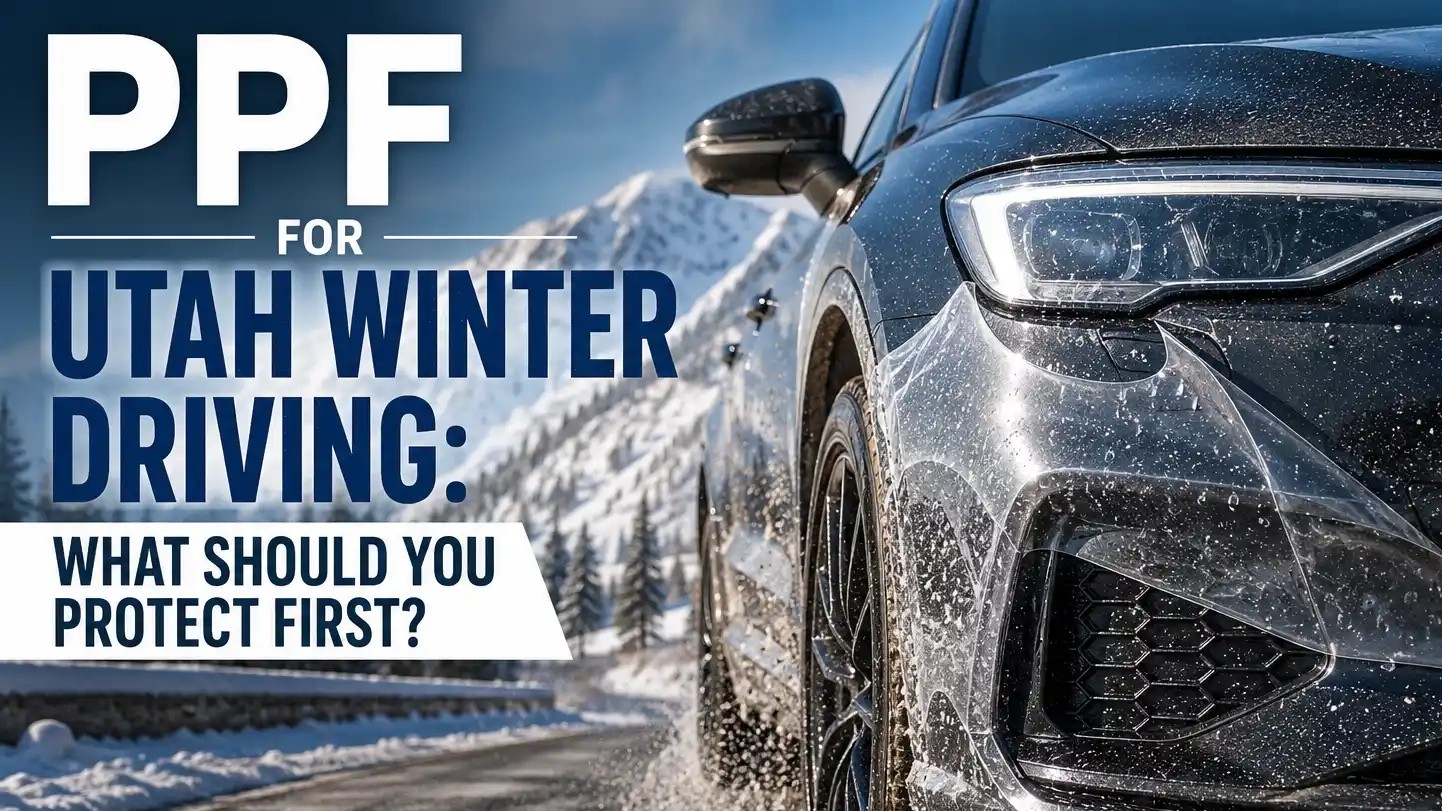
PPF for Utah winter driving makes the most sense on the areas that take the worst road abuse: front bumper, hood, fenders, mirrors, rocker panels, lower doors and rear wheel impact areas.
Full front PPF is usually the best starting point for daily drivers. High-impact PPF makes sense if you drive through snow, slush, gravel, canyon roads, ski traffic or construction zones often. Utah winter is not gentle. It is basically a seasonal paint durability test with prettier mountains.
Why PPF For Utah Winter Driving Is Worth Thinking About
PPF for Utah winter driving is not just for exotic cars, show cars or people who keep microfiber towels in every cupholder. It is a practical decision for normal Utah drivers who deal with freeway spray, winter grime, canyon slush, road salt, cinders, gravel and whatever mysterious gray paste ends up on the lower half of the vehicle by February.
Utah roads can be rough all year, but winter adds a special kind of abuse. Snowstorms bring road treatments. Plows move debris. Tires throw slush and grit into rocker panels. Canyon routes add elevation changes, tight traffic, wet roads and plenty of sand-like material getting kicked into your paint.
Paint protection film, also called PPF or clear bra, gives vulnerable painted areas a clear sacrificial layer. That word matters: sacrificial. The film takes the hit first so your paint does not have to take every little rock, chip, stain and scratch directly.
It is not magic. It will not stop a boulder. It will not keep your vehicle clean in January. Nothing keeps a vehicle clean in January except leaving it in the garage and staring at it like a museum piece. But PPF can reduce the kind of visible wear that makes a newer vehicle look older faster.
What Utah Winter Does To Vehicle Paint
Winter paint damage usually does not come from one dramatic event. It builds up from a hundred small hits.
Common Utah winter paint problems include:
- Rock chips from freeway debris
- Fine scratches from grit and dirty washing
- Slush and grime collecting along lower panels
- Road salt and winter treatment residue sitting on paint
- Cinders and abrasives kicked up by tires
- Bug and grime buildup during warmer stretches between storms
- Rear bumper scratches from ski gear, luggage, tools and cargo
- Lower door and rocker panel wear from snow, mud and gravel
The front of the vehicle usually gets hit first. The lower sides often get hit next. That is why a basic “protect the hood” mindset can miss the bigger picture.
If you drive a sedan around town, full front PPF may be enough. If you drive a truck, SUV, Tesla, Jeep, Rivian, Porsche, 4Runner, Bronco or any vehicle that sees canyon roads, mountain trips or gravel-heavy routes, lower-panel protection is worth discussing too.
Best Areas To Protect For Utah Winter Roads
The best winter PPF coverage depends on your vehicle and driving habits, but some areas come up again and again.
Front Bumper
The front bumper takes the most direct abuse. It sits low, wide and directly in the path of debris from vehicles ahead of you.
For Utah winter driving, the bumper sees:
- Gravel
- Slush
- Salt spray
- Snowmelt grime
- Rock chips
- Bug residue during warm spells
- Parking lot scuffs
If you only protect one panel, the bumper is the obvious starting point. It is also one of the most annoying panels to repair once it gets peppered with chips.
Full Hood
A partial hood package can help, but full hood PPF usually gives a cleaner result. It avoids the visible film line that can appear halfway up the hood on partial front packages.
For winter driving, full hood protection makes sense because debris does not politely stop at the first twelve inches of paint. Wind, speed and vehicle shape all affect where rocks and grit land.
Full hood PPF is especially useful for:
- New vehicles
- Dark paint
- Long freeway commutes
- Canyon driving
- Luxury vehicles
- Vehicles you plan to keep for several years
Front Fenders
Front fenders sit right where road spray and debris can curve around the front end. They are often included in full front PPF packages for good reason.
Full fender coverage is usually cleaner than partial fender coverage, especially on vehicles where film edges would be visible.
Side Mirrors
Side mirrors are small, but they get hammered. They stick out into traffic and collect chips, bugs and road spray.
Mirror caps are especially worth protecting on vehicles with painted caps, gloss black trim or expensive replacement parts. Tiny part, annoying damage. Classic.
Headlights
Headlight PPF can help protect lenses from pitting, scratches and road wear. It may not be included in every package, so it is worth asking about.
This matters more than people think because modern headlights can be expensive. Some headlight assemblies cost enough to make you briefly reconsider driving at night, which is not a great long-term plan.
Rocker Panels
Rocker panels are one of the best PPF add-ons for Utah winter driving.
They sit low on the vehicle, right where tires kick up grit, slush, gravel and road grime. Trucks, SUVs, performance cars and vehicles with wider tires can see a lot of wear here.
Rocker panel PPF is especially useful if:
- You drive through snow and slush often
- You use canyon or mountain roads
- Your vehicle has wider tires
- You drive gravel or construction-heavy routes
- Your lower panels already collect grime quickly
- You want more protection without paying for full body PPF
For many Utah vehicles, rocker panels are the first add-on I would consider after full front PPF.
Lower Doors
Lower doors often get hit by debris thrown from the front tires. This is common on trucks, SUVs and vehicles with exposed lower body lines.
Lower door PPF works well with rocker panel protection because the two areas protect the side of the vehicle where winter grime does the most visible damage.
Rear Wheel Impact Areas
Some vehicles get chipped around the rear wheel arches or rear quarter panels. This depends on stance, tire width, body shape and how much debris gets thrown backward.
Rear wheel impact PPF can be useful for:
- Sports cars
- Performance sedans
- Trucks
- SUVs
- Wide-tire vehicles
- Vehicles with flared panels
- Cars driven often on canyon or gravel-heavy roads
This is one of those areas where a good installer should look at the actual vehicle instead of recommending the same package to everyone.
Rear Bumper Loading Area
Winter means skis, snowboards, boots, bags, strollers, coolers, tools, luggage and general chaos. The rear bumper loading area can get scratched fast.
Rear bumper PPF is a simple add-on that can help protect the painted area where cargo gets dragged in and out.
It is not glamorous. But neither is a scratched rear bumper on a vehicle you just bought.
Full Front PPF Vs High-Impact PPF For Winter
For most Utah drivers, the decision usually comes down to full front PPF or high-impact PPF.
Full Front PPF
Full front PPF usually covers:
- Front bumper
- Full hood
- Full front fenders
- Side mirrors
- Sometimes headlights
This is often the best value for daily drivers because it protects the areas that get hit first and most often.
Full front PPF is a good fit if:
- You mostly drive paved roads
- You commute on I-15, I-80, I-215 or local highways
- You want strong front-end protection
- You recently bought a new vehicle
- You want protection without full body cost
- You care about keeping the front end cleaner long-term
High-Impact PPF
High-impact PPF starts with key front-end areas and adds vulnerable wear zones.
It may include:
- Full front PPF
- Rocker panels
- Lower doors
- Rear wheel impact areas
- Door cups
- Door edges
- Rear bumper loading area
- Other vehicle-specific panels
High-impact PPF is a better fit if:
- You drive in snow and slush often
- You go to ski resorts or canyon areas
- You drive a truck or SUV
- Your vehicle sees gravel roads
- Your vehicle has wide tires
- You want better lower-panel protection
- Full body PPF feels like more than you need
For Utah winter driving, high-impact PPF is the practical middle ground. Not minimal. Not overkill. Just focused on the parts that actually get abused.
What About Full Body PPF?
Full body PPF protects far more of the vehicle, but it is not necessary for everyone.
It makes the most sense for:
- Luxury vehicles
- Matte paint
- Satin finishes
- Specialty paint
- Exotics
- Collectible cars
- High-value trucks and SUVs
- Owners who want the most complete protection
If your vehicle has matte paint, full body PPF becomes more interesting because matte finishes are harder to repair cleanly. A small scratch or stain can be much more frustrating than it would be on gloss paint.
But for many daily drivers, full front plus selected high-impact add-ons is the smarter winter package. It protects the worst areas without turning the quote into a small emotional event.
When Should You Install PPF Before Winter?
The best time to install PPF is before the damage starts.
For a new vehicle, that means installing it soon after delivery, ideally before the first long commute, ski weekend or canyon drive. PPF protects the paint condition underneath it. If the bumper is already chipped, the film can still help going forward, but it will not erase the existing damage.
If your vehicle is used, the installer should inspect the paint first. Existing chips, scratches, contamination or previous paintwork may affect the final result. Some vehicles may need cleaning, decontamination, polishing or touch-up work before film installation.
The practical timeline:
- Best: install PPF when the vehicle is new or nearly new
- Good: install before winter driving starts
- Still useful: install after winter if the paint is reviewed and prepped
- Less ideal: wait until the vehicle is already heavily chipped, then expect the film to hide everything
PPF is protection, not a time machine. If someone invents the paint time machine, Utah drivers will line up immediately.
How To Care For PPF During Utah Winter
PPF reduces damage, but maintenance still matters.
During winter, try to wash the vehicle regularly enough that salt, grit and grime do not sit on the surface for weeks. You do not need to be obsessive. You just do not want February’s entire road history living on your bumper.
Basic winter care tips:
- Rinse off heavy salt and grime when possible
- Use touchless or careful hand washing when the vehicle is very dirty
- Avoid aggressive brushes on dirty paint or film
- Use clean microfiber towels if drying by hand
- Do not pressure wash directly against film edges
- Remove bug splatter and stains when weather allows
- Ask your installer what soaps or coatings they recommend
If you add ceramic coating over PPF, it can make washing easier. Just remember the roles are different. PPF is for impact protection. Ceramic coating helps with slickness, gloss and cleaning. They can work together, but one does not replace the other.
Is PPF For Utah Winter Driving Worth It?
PPF for Utah winter driving is worth it if you care about keeping your vehicle’s paint in better shape through snow season, canyon trips and everyday commuting.
It is especially worth considering if:
- Your vehicle is new
- You drive on freeways often
- You visit ski areas or mountain roads
- You drive a truck, SUV, Tesla or performance car
- Your vehicle has dark, matte or specialty paint
- You want to protect resale condition
- You plan to keep the vehicle for several years
- You are tired of seeing chips show up after every winter
If you are budget-conscious, start with full front PPF. If your vehicle sees more winter abuse, add rocker panels, lower doors and rear wheel impact areas. If the vehicle is high-value or has difficult paint, consider full body PPF.
The right answer is not the biggest package by default. The right answer is the package that matches how and where you drive.
What To Send For A Winter PPF Quote
A good quote starts with useful details.
Send:
- Vehicle year, make and model
- Vehicle color and finish
- Whether the vehicle is new or used
- Photos, especially of existing chips or lower-panel wear
- Where you drive most often
- Whether you commute on freeways
- Whether you drive canyon or ski routes
- Whether you want full front, high-impact or full body PPF
- Any specific areas you are worried about
- Your ideal installation timeline
You can also keep it simple:
“I drive to Park City most weekends in winter and want to protect the front end and lower panels.”
That sentence gives an installer more useful information than a vague “how much for PPF?” request.
Final Recommendation
For most Utah drivers, the best winter protection plan is full front PPF with the option to add rocker panels and lower doors.
For trucks, SUVs, ski commuters, canyon drivers and vehicles with wide tires, high-impact PPF is usually the better conversation. It protects the front end and the lower wear zones that winter roads love to attack.
For matte paint, luxury vehicles or long-term ownership, full body PPF may be worth it.
PPF for Utah winter driving is not about keeping your vehicle spotless. Utah winter will laugh at that idea. It is about reducing chips, scratches and long-term paint wear in the places most likely to get damaged first.
FAQs
What Is The Best PPF Package For Utah Winter Driving?
Full front PPF is usually the best starting point. It protects the bumper, full hood, full fenders and mirrors. For heavier winter use, high-impact PPF with rocker panels and lower doors may be better.
Does PPF Protect Against Road Salt?
PPF creates a protective layer over the paint, which can help reduce direct exposure to winter grime, salt residue and road treatment debris. You should still wash the vehicle regularly during winter.
Should I Get Rocker Panel PPF In Utah?
Rocker panel PPF is a smart add-on for many Utah drivers, especially trucks, SUVs, sports cars and vehicles that see snow, slush, gravel, canyon roads or wide-tire debris.
Is PPF Better Than Ceramic Coating For Winter?
PPF is better for rock chip and impact protection. Ceramic coating is better for slickness, gloss and easier cleaning. For winter driving, many owners start with PPF and then consider ceramic coating over it.
Can PPF Be Installed After Winter?
Yes, but the paint should be inspected first. Existing chips, scratches and contamination may still be visible under the film unless corrected before installation.
Does PPF Make A Car Damage-Proof?
No. PPF helps reduce common road damage, but it does not make a vehicle invincible. Large rocks, sharp objects and heavy impacts can still damage film or paint.
What Areas Should I Protect First?
Start with the front bumper, hood, fenders and mirrors. Then consider rocker panels, lower doors, rear wheel impact areas and the rear bumper loading area based on how you use the vehicle.
References and Links
UtahPPF.com homepage
UtahPPF.com full front PPF page
UtahPPF.com high-impact PPF page
UtahPPF.com contact page
Utah Department of Transportation snow removal information
3M Scotchgard Paint Protection Film Pro Series information
SEO Pack
Title Options:
PPF For Utah Winter Driving: What Should You Protect First?
Best PPF Coverage For Utah Winter Roads, Snow And Slush
Should You Get PPF Before Winter In Utah?
Focus Keyphrase:
PPF for Utah winter driving
SEO Title:
PPF for Utah Winter Driving: What To Protect First
Meta Description:
Learn what PPF protects during Utah winter driving, which panels matter most, and when full front or high-impact coverage makes sense.
Slug:
ppf-for-utah-winter-driving
Short Excerpt:
PPF for Utah winter driving can help protect your bumper, hood, rocker panels and lower doors from chips, slush, salt and road debris.
SEO Tags:
winter PPF, Utah roads, paint protection, clear bra, full front, rocker panels, vehicle care