TLDR: Repair depends on the chip and your finish expectations
You do not automatically need to repair every rock chip before installing paint protection film. Stable paint with a few small chips may still be suitable when your main goal is preventing additional damage. The catch is that PPF protects the condition underneath it; it does not replace missing paint, erase old chips, or make an uneven repair disappear. Existing defects can remain visible through clear film.
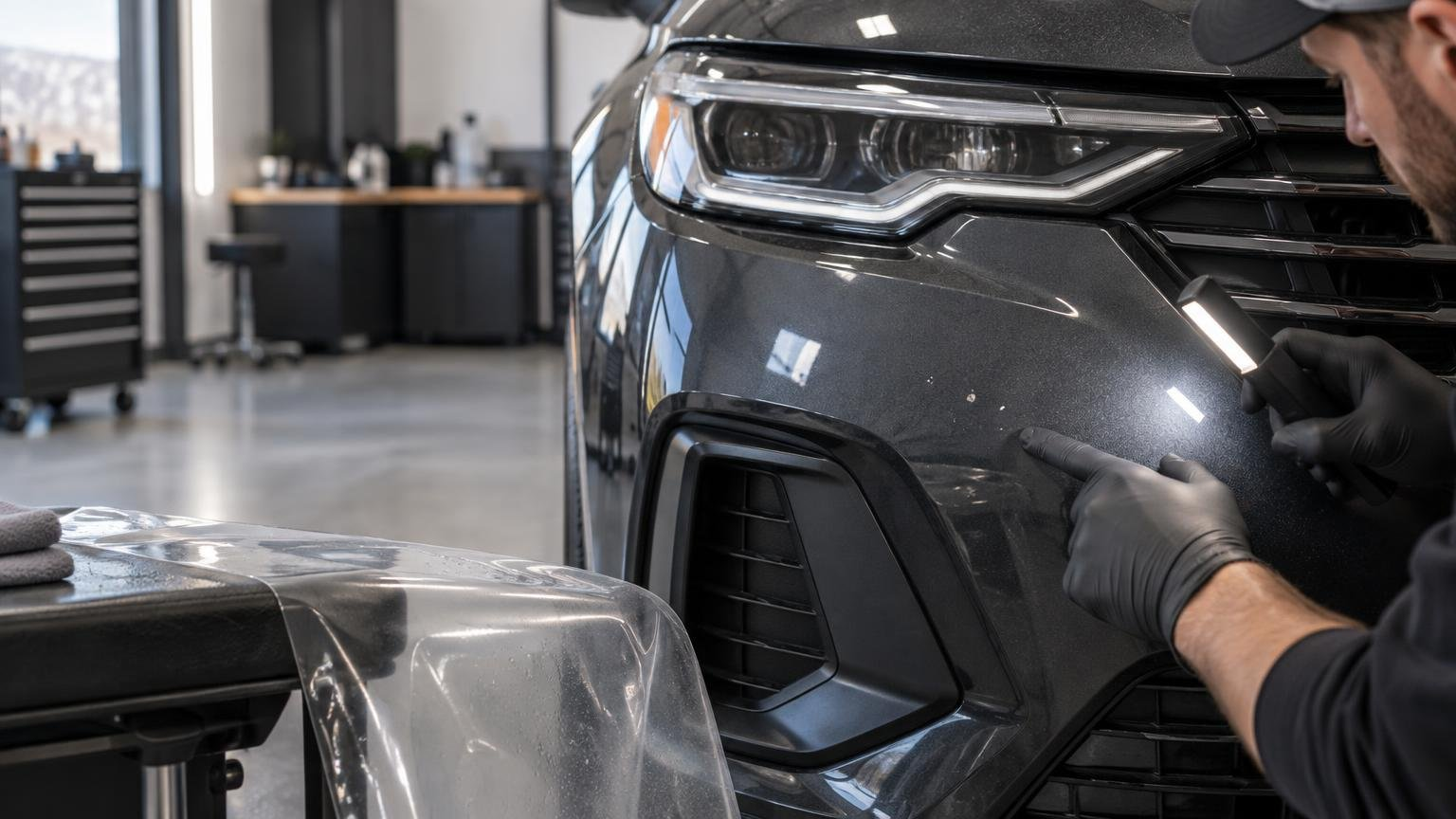
Inspect the vehicle in bright, angled light before choosing a repair path. For a few stable chips, you may accept their appearance and install film. Consider touch-up work when exposed material needs attention and a small cosmetic repair meets your expectations. Consider professional refinishing when damage is extensive, corrosion is present, clear coat is failing, or the desired finish cannot be reached with touch-up paint. Postpone PPF if the repair is not stable or newly applied paint has not fully cured.
Start with a close-up paint inspection
Wash the vehicle, then examine each proposed coverage panel from close range and from normal viewing distance. Pay particular attention to the bumper, hood edge, fenders, mirrors, rocker panels, and lower doors. Those areas commonly face freeway debris, construction grit, canyon travel, winter grime, and gravel exposure in Utah.
Document each chip with photos and discuss the condition with the installer before approving the quote. The inspection should identify missing paint, exposed substrate, corrosion, peeling clear coat, scratches, overspray, old touch-up paint, texture differences, and evidence of previous refinishing. These details can affect preparation, appearance expectations, scheduling, and whether a panel should receive film at all.
| What you find | Likely starting point | What to ask the shop |
|---|---|---|
| A few small, stable chips | Accept them or consider limited touch-up | Will the chips remain noticeable through clear film? |
| Exposed substrate without visible corrosion | Evaluate touch-up or professional chip repair | What repair system is appropriate, and how long must it cure? |
| Raised or uneven touch-up paint | Inspect the texture before installing PPF | Will the high spot remain visible or affect the finished appearance? |
| Many chips across one panel | Compare repair costs with panel refinishing | Would refinishing better match the finish goal? |
| Peeling clear coat, corrosion, or unstable prior repair | Pause the PPF project | What repair is required before the panel is considered stable? |
| Recently refinished panel | Wait for full cure and confirm compatibility | Which paint system was used, and has its specified cure process been completed? |
Four reasonable choices before PPF
1. Accept the existing chips
This can be sensible for a daily driver with limited, stable damage when preventing the next round of chips matters more than achieving a near-perfect appearance. The installer should still record the pre-existing condition. After installation, do not mistake a visible chip beneath the film for new impact damage or an installation defect.
2. Use touch-up paint
Touch-up work can add color to a small damaged area, but the result depends on the repair method, paint match, chip shape, and finish expectations. A touch-up repair that sits above the surrounding surface should be treated as a visible texture issue. PPF should not be expected to flatten, fill, or repair that raised spot; 3M notes that paint defects may remain visible through protection film. 3M’s vehicle-film installation guidance
Have the installer examine the touch-up after it has dried and hardened according to the repair product or paint-system instructions. Do not sand, level, or polish a repair merely because film is scheduled unless the person responsible for the paint work recommends that process.
3. Refinish the panel
Refinishing may make more sense when a panel has widespread chipping, corrosion, failing clear coat, or a finish expectation that spot repairs cannot satisfy. It is a larger decision than simple preparation: the quality and stability of the entire repair system matter when film is applied and when it is eventually removed.
A refinished panel must be fully cured under the applicable paint manufacturer’s directions before PPF installation. There is no responsible universal waiting period for every repair because paint systems and curing conditions differ. Avery Dennison says non-OEM paint should be dry, hardened, and free of scratches, and directs installers to the paint manufacturer’s cure guidance. Its bulletin also warns that retained solvent can affect adhesion and contribute to shrinkage or blistering. Avery Dennison’s PPF application bulletin
4. Postpone coverage
Delay installation when corrosion, peeling clear coat, uncertain repair history, trapped solvent, or an unfinished touch-up process makes the surface questionable. Waiting is also reasonable if you have not decided whether the visual result of the current chips is acceptable. Film applied quickly but over an unstable or disappointing surface is not the better purchase.
Chip repair is not paint correction
Rock-chip repair deals with missing or damaged material at an impact point. Paint correction addresses correctable surface-level appearance problems such as swirls, light scratches, or haze. Polishing may improve those surface defects, but it does not put missing paint back into a chip. UtahPPF treats correction, touch-up work, chip repair, and body repair as separate pre-installation decisions.
If the paint has swirls as well as chips, evaluate the two issues separately. The guide to paint correction before PPF explains when polishing may be worthwhile without turning it into a substitute for chip repair.
Normalize the quote before choosing a shop
Two PPF quotes are not comparable if one assumes installation over the current paint while the other includes decontamination, correction, touch-up coordination, or extra evaluation of a repainted panel. Ask each shop to put the same scope in writing.
- Which exact panels will receive film?
- Which chips or repairs will remain visible?
- Who is responsible for touch-up or body work?
- What surface preparation and correction are included?
- Has any ceramic coating, wax, sealant, tar, or other residue been removed?
- How will previously repainted panels affect installation and removal expectations?
- What proof of paint-system cure does the installer need before scheduling?
3M’s preparation guidance calls for removing ceramic coating and residues, mechanically decontaminating the surface, and completing a final inspection before installation. That preparation improves readiness for film, but it still does not repair missing paint.
The practical decision
For a Utah daily driver with a handful of stable chips, start by comparing the appearance of leaving them alone against a careful touch-up repair. For extensive chipping, exposed or corroding areas, failing clear coat, or an especially high finish standard, get a repair or refinishing assessment before committing to film.
The best sequence is simple: inspect the paint, decide what appearance you can accept, complete any chosen repair, allow the repair system to cure fully, and have the PPF installer inspect the surface again. Protecting the car a little later is better than locking in an appearance you already dislike or applying film over paint whose stability is uncertain.
References
- Paint Protection Film Utah: What To Know Before You Protect Your Car – Utah PPF
- Is PPF Worth It on a Used Car in Utah? A Better Way to Decide – Utah PPF
- 3M™ Protection Wrap Film Vehicle Installation
- Home – Utah PPF
- Dealer PPF vs a Specialty PPF Installer in Utah: What Are You Actually Comparing? – Utah PPF
- IB4.30 Avery Dennison Paint Protection Film Application
- How Much Does PPF Cost In Utah? – Utah PPF
- 3M™ Paint Protection Film
- Auto Films – Official 3M Support