TLDR
It may be possible to replace ppf on one damaged panel without replacing all the film on the vehicle. The right scope depends on whether the damage is limited to the film, whether the paint or panel also needs repair, how the original film was installed, and whether a compatible product and finish are available. Photograph the area before peeling, trimming, heating, or aggressively cleaning it, then ask an installer to inspect the film, paint, edges, seams, and surrounding panels.
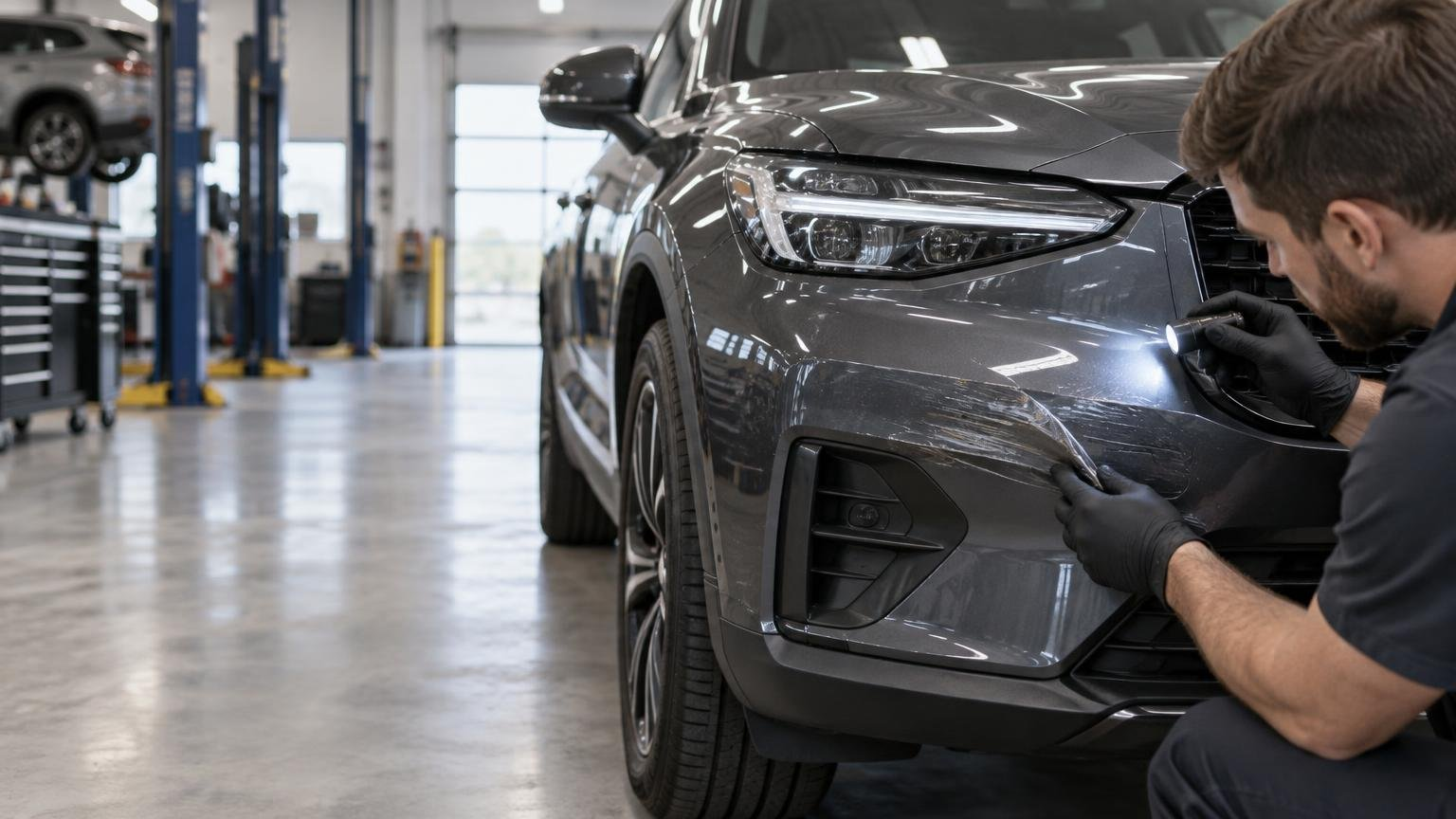
A scraped bumper, torn rocker section, lifting fender edge, or impact mark creates two separate questions: what happened to the film, and what happened beneath it? Do not assume that visible film damage means the paint is damaged—or that the film definitely saved the paint. An inspection may require controlled professional removal before the condition underneath can be established.
Document the damage before touching the film
Start by preserving a clear record of the affected area. This is useful whether you contact the original installer, another PPF shop, an insurer, or a body shop. It also gives the installer context before deciding whether an in-person inspection is necessary.
Take the first set of photos before cleaning the panel if doing so is safe. Dirt, transferred material, torn film, and a lifted edge can all help show the location and nature of the contact. Avoid pulling on loose material to reveal the paint. A small lifted section can become a much larger removal problem once it is handled.
- A wide photo showing the entire side, front, or rear of the vehicle
- A mid-range photo showing the complete panel and adjacent panels
- Close photos of the scrape, tear, puncture, stain, or lifted edge
- Photos taken from more than one angle to show texture and reflections
- The nearest film edge, seam, body line, badge, sensor, or trim piece
- Any visible dent, paint chip, crack, exposed paint, or panel misalignment
- An undamaged adjacent section for a finish and appearance comparison
- The vehicle identification details, current mileage, and date of the incident if relevant
Utah PPF’s contact intake asks for vehicle details, color or finish, paint condition, existing damage, timeline, and helpful photos. Those details are a sensible starting point for any panel-replacement assessment.
Separate film damage from possible paint or body damage
PPF is a protective layer, not a paint or body repair. Replacing the film will not correct a dent, fractured paint, deep gouge, cracked bumper, loose trim piece, or panel-alignment problem underneath it. If paint or body work is required, that work will generally need to be addressed before a clean replacement-film installation can be planned.
Photos can help an installer triage the situation, but they may not reveal the complete condition under an opaque scuff, displaced film, or impact point. Ask whether the vehicle should go first to a PPF installer or a body shop. If removal is needed to inspect the paint, clarify who will remove the film and how the condition will be documented afterward.
This distinction also matters for warranties. XPEL states that its film warranty applies to the film rather than damage to the paint beneath it. Its warranty terms concern qualifying product issues, not every impact or damage event.
Identify the existing film before requesting a replacement
“Clear PPF” is not a complete product identification. Different manufacturers and product lines may use different topcoats, adhesive systems, gloss levels, textures, and warranty terms. Matte, satin, and colored films make product identification even more important because the replacement affects both protection and appearance.
Look for the original invoice, warranty registration, installation email, or quote. Send the installer the following information if available:
- Installation date and original installer
- Film manufacturer and exact product line
- Clear gloss, matte, satin, colored, or other finish
- Original coverage map, including partial-panel boundaries
- Any ceramic coating or other treatment applied over the film
- Previous film replacements on the affected or adjacent panels
- Known repainting, body repair, touch-up work, or paint correction
- Invoice, warranty card, registration, and prior claim documents
If the product is unknown, say so rather than guessing from appearance. An installer can then explain what can be identified during inspection and what uncertainty remains.
Can you replace PPF on one damaged panel?
Often, the conversation can begin with replacing only the affected piece. That does not guarantee the replacement scope will follow the painted panel boundary. PPF may cover a complete panel, stop at a partial-panel line, wrap around an edge, continue into an opening, or meet another piece at a seam. The installer needs to determine where the damaged piece starts and ends.
A contained fender piece may be a different job from damage crossing a bumper seam or a partial-hood line. Damage near wrapped edges, parking sensors, trim, badges, sharp body contours, or an adjacent film section may also change the practical scope. The useful question is not simply, “Can you replace the panel?” Ask, “Which installed piece is damaged, and what must be removed to create a sound replacement?”
Utah PPF’s separate guide to adding coverage later also discusses inspection, existing-film age, prior repairs, and panel-by-panel replacement. That guide is more useful when the decision is about expanding coverage rather than responding to fresh damage. Read the staged PPF coverage guide.
What affects how the new film may look?
A newly installed section may not look identical to film that has already spent time on the vehicle. This does not automatically mean either section is defective. It means appearance needs to be part of the estimate rather than an assumption made after installation.
- Film age: Existing material has had more exposure to washing, weather, road grime, and normal use.
- Finish: Gloss, matte, satin, and colored films make differences in sheen, texture, or tone more noticeable.
- Product availability: The original product line may have changed or may no longer be available.
- Edge placement: A visible replacement boundary may attract more attention than a wrapped or concealed edge.
- Partial coverage: A line across a hood or fender can make differences easier to notice.
- Coatings and care history: Treatments and maintenance may affect how the surrounding film sheds water or reflects light.
- Paint history: Repainted panels may differ in color, texture, hardness, or removal risk from factory-painted areas.
Ask the installer to compare the proposed replacement with the surrounding film in direct light and shade when practical. For matte, satin, or color PPF, request an explicit discussion of finish continuity. An exact match should not be promised without considering the existing product and its condition.
Why you generally should not remove damaged PPF yourself
Peeling damaged film may seem like the fastest way to check the paint, but removal creates its own variables. XPEL’s product-care guidance recommends professional removal. Review XPEL’s current product-care guidance. Professional removal is not a guarantee against paint problems, especially when the panel has repaint or repair history, but it allows the condition and technique to be assessed before work begins.
The supplied 3M warranty card specifically excludes paint pull during removal from its warranty coverage. That is another reason to disclose repainting, body work, and touch-ups before approving removal. Review the 3M PPF warranty information card.
Until the panel is inspected, avoid trimming film with a blade, applying concentrated heat, using strong solvents, or directing a pressure washer at a lifted edge. For routine ownership guidance after the repair, see how to care for paint protection film in Utah.
Warranty and insurance are separate questions
Impact damage is not automatically a film-warranty claim. Manufacturer warranties usually define particular covered product defects and exclusions. For example, the supplied 3M warranty card identifies defects such as yellowing, bubbling, and cracking for covered products while excluding circumstances that include accidents, ordinary wear, and dents caused by rocks or road debris. It directs owners to begin a claim with the installer and retain the completed warranty card and original invoice.
A lifting edge may therefore require a different conversation from a fresh scrape caused by road debris or a parking incident. Do not assume the appearance of the damage determines coverage. Check the exact manufacturer warranty, installer workmanship terms, installation date, required documents, and claim process.
Insurance is also policy-specific. A policy or carrier may treat film, underlying paint repair, body work, and replacement labor differently. Ask what documentation, photos, estimates, or approval are required before authorizing removal or repair. Neither an installer nor a generic guide can predict coverage without the applicable policy and damage details.
Photo-and-document checklist for an installer assessment
| Send or bring | Why it helps |
|---|---|
| Wide, mid-range, and close photos | Shows the panel, impact location, film boundaries, and surrounding condition |
| Vehicle year, make, model, trim, and color | Helps identify panel geometry and finish |
| Installation date and original installer | Establishes film age and a possible source for product records |
| Film brand, product line, and finish | Helps evaluate availability and appearance compatibility |
| Invoice and warranty documents | Supports product identification and any applicable claim process |
| Coverage map or original quote | Clarifies where pieces, seams, and partial-panel lines were placed |
| Repaint and body-repair history | Flags important removal and preparation considerations |
| Details of coatings or treatments | Provides context for cleaning, preparation, and appearance |
| Incident date and available claim information | Helps preserve a consistent record if insurance is involved |
Questions to ask before approving the work
- Is the damage limited to one installed film piece?
- Does any film need to be removed before the paint can be assessed?
- Should paint or body repair happen before the PPF work?
- Is the original film product still available?
- If not, what replacement is proposed, and what differences may be visible?
- Where will the new edges or seams be located?
- Will any adjacent film need removal to complete the work?
- How could film age, finish, coatings, or partial-panel lines affect the match?
- Does repaint history change the removal or installation plan?
- Which warranty or insurance documents should be submitted before work begins?
- What workmanship documentation will be provided for the replacement section?
If you consult a different installer from the one who performed the original work, provide as much documentation as possible. The new installer may be able to assess the current condition, but should not be expected to know the exact product, preparation, edge treatment, or installation choices used previously without records.
Treat damage replacement as a repair decision, not a new coverage plan
Replacing one damaged PPF section is different from deciding how much of a new vehicle to protect. The immediate priorities are preserving evidence, identifying the existing material, evaluating the paint and panel, and defining the smallest responsible replacement scope. Questions about adding rockers, doors, rear impact zones, or full-body coverage can wait until the damaged area has been assessed.
The next step is simple: gather photos, vehicle and film details, repaint history, invoices, and warranty documents. Then request an assessment that addresses both the underlying panel and the proposed film boundaries. One damaged section may not require replacing everything, but the decision should follow inspection—not an assumption that every panel, finish, and installation can be treated the same way.