Door-cup film is the most broadly useful small PPF add-on because hands, fingernails, rings, and keys repeatedly reach the same painted recess. A rear-bumper loading strip can move into first place on an SUV, hatchback, crossover, or family vehicle that regularly carries luggage, strollers, pets, tools, or ski equipment. Door-edge film ranks third for most owners, but it becomes much more valuable when children, narrow parking spaces, or a tight garage make door contact predictable.
These pieces protect three separate zones. They are not substitutes for broader door or bumper coverage, and there is little reason to buy all three automatically. Start with the surfaces that actually receive repeated contact on your vehicle.
A practical ranking for most vehicles
| Rank | PPF add-on | Best reason to choose it | What it does not protect |
|---|---|---|---|
| 1 | Door cups | Frequent contact from fingers, nails, rings, jewelry, and keys | Door handles, door edges, and the broad door skin |
| 2 | Rear-bumper loading strip | Repeated loading of luggage, strollers, pet crates, tools, or cargo | Full bumper face, corners, lower valance, hatch, cargo sill, and side panels unless quoted |
| 3 | Door edges | Doors regularly open near garage walls, posts, curbs, or adjacent vehicles | Door skins, dents, and damage from a hard impact |
Treat that order as a starting point rather than a universal package. A two-door coupe may need only two handle recesses. A three-row SUV could have four door cups, four long door edges, and a wide painted loading surface. A sedan may have no useful horizontal bumper surface beneath the trunk opening. Vehicle geometry should change both the recommendation and the quote.
Door cups protect the handle recess, not the whole door
A door cup, also called a handle well, is the recessed painted area behind or around an exterior door handle. The film is a small transparent urethane piece fitted to that recess. Honda describes its accessory film for this location as protection from scratches caused by nails, jewelry, and keys. Honda’s exterior-accessory guide also treats door-cup film and door-edge film as distinct products.
Door cups make sense when the recess already shows fine marks, the vehicle has deep handle pockets, or several people use the vehicle. They are also easy to prioritize one opening at a time: the driver’s door usually receives more contact than a rarely used rear door.
The small piece cannot protect the handle itself, the outer edge of the door, or the broad painted door skin. It also will not stop a key or other sharp object that reaches beyond the covered recess. Ask whether the proposed pattern covers only the deepest part of the cup or extends around the area where fingers regularly land.
Door-edge film is valuable when contact is predictable
Door-edge PPF is a narrow adhesive strip applied along the outer edge of a door. Its job is to reduce nicks and scrapes where that edge touches a wall, post, neighboring vehicle, or another hard surface. Honda’s vehicle-specific accessory package, for example, supplies strips fitted to all applicable doors.
This add-on deserves a higher rank when children open the rear doors, the vehicle is parked in a narrow garage, or long doors regularly swing close to an obstacle. It has less value when the doors have generous clearance and the edges rarely touch anything.
A narrow strip is not dent prevention. It may reduce light scraping and paint transfer at the protected edge, but PPF cannot completely prevent damage from a severe impact. It also provides no meaningful coverage for the broad door panel where another vehicle’s door might strike.
Door-edge quotes need more detail than “four doors.” Confirm the strip width, which edges are included, the start and stop points, and whether the film terminates on the face or wraps around the edge. The door shape, seals, trim, body lines, and available clearance can affect the pattern.
A bumper loading strip earns its cost through cargo use
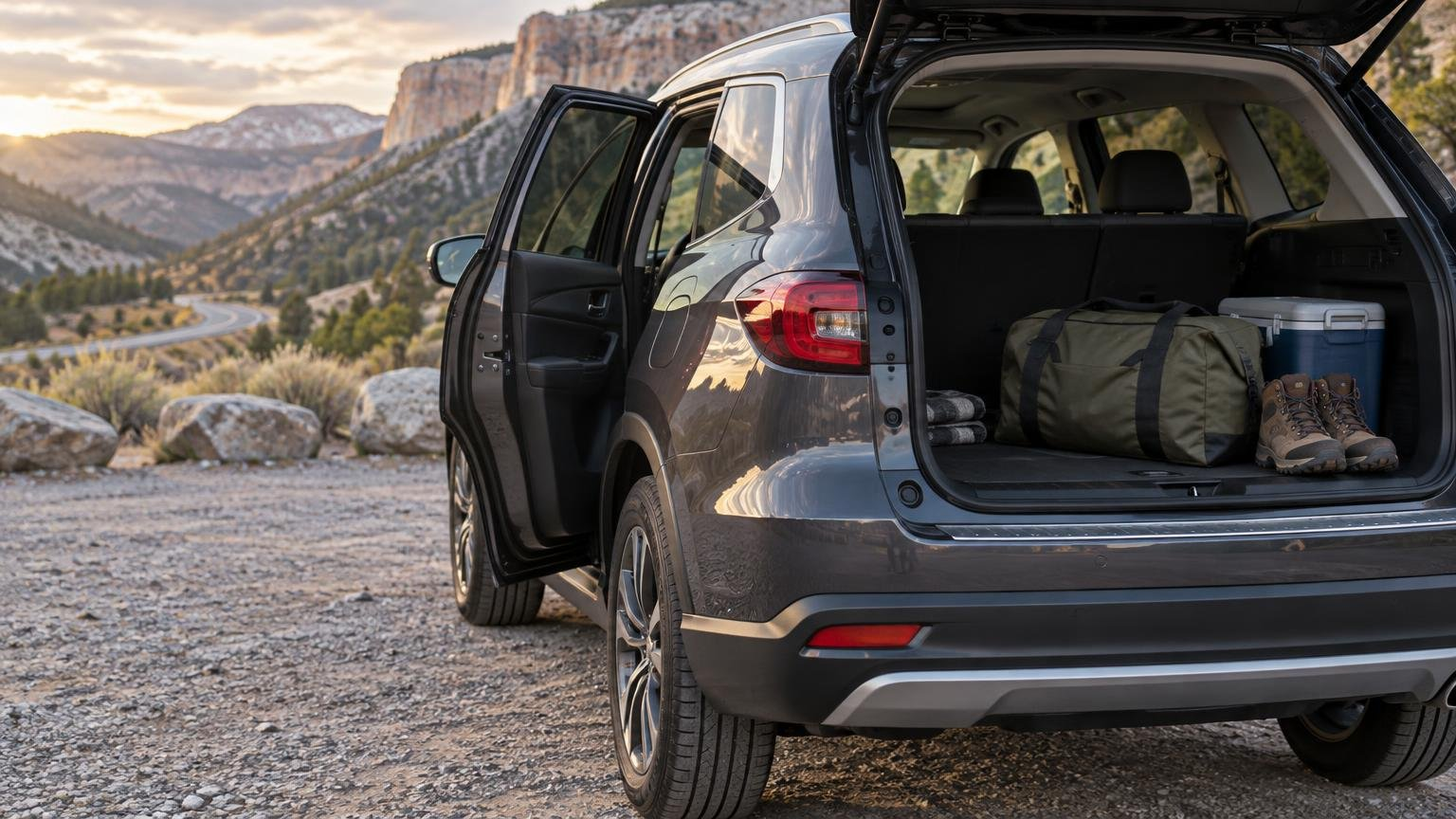
A rear-bumper loading strip covers the painted upper bumper surface directly below a trunk, liftgate, or cargo opening. Ford and Honda describe this area as protection against paint damage while cargo is loaded and unloaded. Ford’s rear-bumper protector description shows why the vehicle-specific shape matters: the useful surface follows the bumper and cargo-opening geometry rather than a universal rectangle.
This is often the best small add-on for a family crossover, dog vehicle, airport-trip car, work SUV, or truck with a repeatedly used cargo opening. Utah ski trips and winter travel add another consideration: grit on bags, bins, boots, and pet equipment can be dragged across the painted loading surface.
The protection remains local. A typical loading strip does not cover the full bumper face, bumper corners, lower valance, liftgate, tailgate, interior cargo sill, or rear quarter panels unless the quote lists those areas. Owners who load bulky equipment should trace the object’s actual path into the vehicle. The first contact point may be the upper bumper, but the second may be an uncovered sill or side panel.
Use this panel checklist before accepting the quote
If two quotes describe these add-ons differently, they are not the same job yet. Ask the installer to mark the proposed coverage on a photo or vehicle diagram and verify the following details:
- Door cups: How many handle recesses are included, and does the pattern cover the full area touched by fingers and keys?
- Door edges: Which doors are included, how wide is each strip, where does it begin and end, and does it wrap around the edge?
- Rear bumper: Which horizontal painted surface is covered, and where will the film stop near trim, body lines, sensors, contours, or the cargo opening?
- Finish: Is the film clear gloss, satin, or another finish appropriate for the painted or decorative surface?
- Preparation: What cleaning or paint correction is included before installation?
- Replacement: Can one damaged piece be removed and replaced without changing the other add-ons?
- Price: What is the separate installed cost for each zone rather than the combined add-on total?
UtahPPF notes that quotes can vary with vehicle year, make, model, size, panel shape, finish, paint condition, pattern requirements, edge treatment, and selected add-on areas. There is no useful universal price for these small pieces. Compare the installed cost only after the coverage map and finish match.
Visible boundaries and finish matching matter on small pieces
Small PPF sections have visible start and stop points. Those boundaries may be slightly noticeable depending on paint color, finish, lighting, contamination along the edge, and the shape of the panel. Partial coverage always trades a lower project cost for more film boundaries.
A clear gloss piece is usually subtle on gloss paint, but “clear” does not guarantee an invisible result on every material. XPEL notes that clear PPF can add slight gloss over chrome, aluminum, or brushed metal and recommends a satin product for brushed finishes. That makes finish confirmation important when a loading strip crosses decorative trim or when the vehicle has matte or satin paint.
Also decide whether you want a nearly invisible clear strip or an intentionally visible protector. Toyota accessory literature illustrates both clear and black or textured rear-bumper appliqué styles. That is a design choice, not proof that one style is better for every vehicle.
Cleaning and replacement are straightforward with edge awareness
Follow the instructions for the installed film rather than a generic waiting period. The cited 3M guidance says to wait at least 72 hours after installation before washing, while XPEL lists 48 hours for its ULTIMATE PLUS and FUSION films. The applicable manufacturer and installer instructions should control.
Once the film has cured, pay particular attention to exposed edges. 3M’s PPF installation and care guidance warns that aggressive power washing can force water beneath film and contribute to lifting or curling. XPEL likewise advises keeping high-pressure water away from film edges. Neutral automotive shampoo, gentle hand washing, and nonabrasive tools are sensible choices for these small pieces.
A self-healing topcoat on an applicable film may reduce the appearance of minor surface scratches. A deep cut that penetrates the film, a lifted edge, or a heavily worn loading strip may require professional assessment and replacement. Because these add-ons are small, replacing one defined piece can be more practical than living with a damaged boundary, but removal is still best handled professionally.
For broader ownership guidance, see how to care for paint protection film in Utah.
Choose by contact frequency, not by package name
For most owners, start with door cups if handle recesses receive daily contact. Put a rear-bumper loading strip first when cargo, children’s equipment, pets, or work gear regularly crosses a painted upper bumper. Choose door-edge film when the doors repeatedly approach a known obstacle rather than as a general substitute for door protection.
You can also add protection in stages. UtahPPF’s guide to adding more PPF later identifies loading edges and other high-contact areas as logical later additions, while noting that older and newer film may not match perfectly and that partial-panel transitions can complicate expansion.
Frequently Asked Questions
Which small PPF add-on should most owners choose first?
Start with door cups when handle recesses receive daily contact from hands, nails, rings, or keys. Move a rear-bumper loading strip into first place when cargo regularly crosses a painted upper bumper.
Do I need door-cup film on every door?
Not necessarily. Prioritize the openings that receive the most use, then confirm how many handle recesses the quote includes and how much of each recess the pattern covers.
Can door-edge PPF prevent dents?
No. A narrow strip can reduce light scraping and paint damage along the protected edge, but it cannot prevent dents or damage from a severe impact.
Is a rear-bumper loading strip useful on every vehicle?
No. It is most useful when the vehicle has a painted loading surface below the cargo opening and luggage, strollers, pets, tools, or other cargo regularly crosses it. Vehicle geometry determines whether there is a worthwhile surface to cover.
Does a loading strip protect the entire rear bumper?
Usually not. It generally covers the painted upper loading surface, not the bumper face, corners, lower valance, hatch, cargo sill, or side panels unless those areas are specifically listed.
Will the edges of these small PPF pieces be visible?
They can be slightly noticeable depending on the paint color, finish, lighting, contamination, and panel shape. Partial coverage costs less than broader coverage but creates more start and stop lines.
Can clear PPF change the appearance of trim or matte paint?
Yes. Clear film can add slight gloss over chrome, aluminum, or brushed metal, so confirm the film finish when an add-on crosses decorative trim or covers matte or satin paint.
Can I add door cups, door edges, or a loading strip later?
Yes, but older and newer film may not match perfectly, and existing partial-panel transitions can complicate expansion. Plan the likely next coverage zone before installing the first pieces.
References
- # Prologue
## 2026 Exterior Accessories### Door
- Frequently Asked Questions (FAQs) – XPEL Support
- Edge 2019-2024 Rear Bumper Protector | Accessories | Ford.com
- PPF Packages Utah – Utah PPF
- # EXTERIOR ACCESSORIES
- 3M™ Paint Protection Film Installation Guidelines
- www.xpel.com
- Can You Add More PPF Later? How to Build Coverage in Stages – Utah PPF