A useful PPF quote should not promise “wrapped edges” as though every edge on the vehicle will receive identical treatment. It should identify which panels are fully covered, where film will wrap around an accessible edge, where it will stop short, and where a seam or relief area may remain. UtahPPF’s quote guidance treats wrapped, pattern-cut, exposed, and seamed areas as separate scope details because edge treatment depends on the vehicle and panel.
For the buyer, the goal is not to demand hidden edges everywhere. It is to understand what you are buying before installation. Ask for a panel-by-panel description, annotated coverage examples, and written exceptions for trim, sensors, tight corners, difficult contours, badges, washers, cameras, and repainted panels.
What wrapped and exposed edges mean
A wrapped edge generally means the film continues beyond the visible face of a panel and turns around an accessible panel boundary. This can make the film boundary less noticeable and may move the edge away from the main painted surface. On a suitable hood or fender edge, that can produce a cleaner appearance.
An exposed edge means the film ends on the visible side of the panel or shortly before a bend, trim piece, opening, or adjacent component. The line may be visible at close range, and dirt can become more noticeable along it. That does not automatically make the installation defective. A controlled exposed edge may be the appropriate plan when the panel has a sharp turn, limited access, complex geometry, closely fitted trim, or hardware that the shop does not plan to remove.
| Quote term | What the buyer should confirm | Why it matters |
|---|---|---|
| Wrapped edge | Which named edges will wrap and whether adjacent parts require removal | Clarifies the promised appearance and disassembly scope |
| Exposed or pattern-cut edge | Where the film will end and how visible the boundary is expected to be | Prevents a clean, intentional boundary from becoming a pickup-day surprise |
| Seam or relief area | Its location and approximate appearance | Documents necessary transitions around complex shapes or openings |
| Partial-panel line | Where coverage crosses a hood, fender, or other panel | A line across a broad painted surface is usually more noticeable than an edge near a panel boundary |
Why every edge cannot be treated the same
Access is the first constraint. Film cannot simply disappear behind every grille, lamp, molding, sensor, badge, washer, or adjoining panel. Reaching an edge may require disassembly, and shops differ in what they remove as part of the quoted job. Your scope should say whether trim or hardware removal is included, excluded, or approved only after inspection.
Geometry matters too. Tight bends, compound curves, corners, and narrow panel ends can create adhesion challenges. The STEK film handling and installation guidance says a bulk-installed edge should sit at least 1/16 inch, or 2 mm, before a body-panel bend. It also warns that protruding film can collect dirt and water and may later separate. This is one reason an intentional exposed edge can be more realistic than forcing film around an unsuitable bend.
Manufacturer guidance also treats complex contours and wrapped edges as areas that require preparation and adhesion management. A wrapped edge therefore is not automatic proof of a better installation. Overall quality also depends on preparation, placement, stretch management, clean boundaries, appropriate seams, and how the film behaves around the panel’s difficult features.
Compare appearance, cleaning, and seams separately
Wrapped edges often provide the cleanest appearance when the edge is accessible and the film can remain secure. They can also reduce the number of visible boundaries on broad, easy-to-see surfaces. That benefit matters most on vehicles with dark, glossy paint or owners who inspect the finish closely.
Exposed edges remain easier to see and may collect a fine dirt line over time. Careful washing helps, but edge treatment never makes PPF maintenance-free. The 3M paint protection film installation guidance cautions against directing pressure streams toward film edges because excessive pressure can force water underneath and contribute to lifting or curling. The same care applies to wrapped areas where the film terminates behind a panel edge.
A seam is a different issue from an exposed perimeter. Seams may appear where one piece cannot practically cover a complex bumper, opening, or high-impact area. Ask where they will be located and whether they can be seen from a normal standing position. When reviewing care instructions later, follow a method designed for film rather than treating the surface like bare paint; this guide to caring for paint protection film in Utah covers the broader ownership routine.
Precut patterns do not settle the quality question
A pre-cut pattern can include intentional gaps, extended edges, or relief areas depending on the vehicle and pattern design. Bulk installation gives the installer a different way to size and finish a piece, but neither method establishes quality by itself. XPEL states that its paint protection films may be installed in bulk or with pre-cut patterns from its pattern database.
Ask how the chosen method affects your specific panels. The useful questions are where each piece ends, which edges can be wrapped, what remains exposed, and where seams should be expected. If two quotes use different edge maps, they are not the same job yet.
What your written quote should include
Request an annotated photo set or panel diagram showing boundaries, expected seams, and wrap-able edges. UtahPPF recommends putting those details and exceptions in writing rather than relying on package language alone. For each panel, the scope should cover:
- Whether coverage is full-panel or partial-panel.
- Which edges will be wrapped and which will remain exposed.
- The expected location of seams, relief cuts, and pattern boundaries.
- How badges, trim, cameras, sensors, washers, headlights, and other hardware will be treated.
- Which parts may be removed, who authorizes removal, and whether it changes the price.
- Whether old film, chips, touch-up paint, prior repairs, or repainting changes the plan.
- The named film manufacturer, product series, and finish.
- Any conditional charges, exclusions, workmanship support, and relevant warranty terms.
Paint history deserves particular attention. Repainted panels, touch-up work, existing chips, and old film can affect preparation, removal risk, and the final plan. If the vehicle needs surface work first, compare that requirement with the practical distinctions in this guide to paint correction before PPF.
Inspect the promised boundaries at pickup
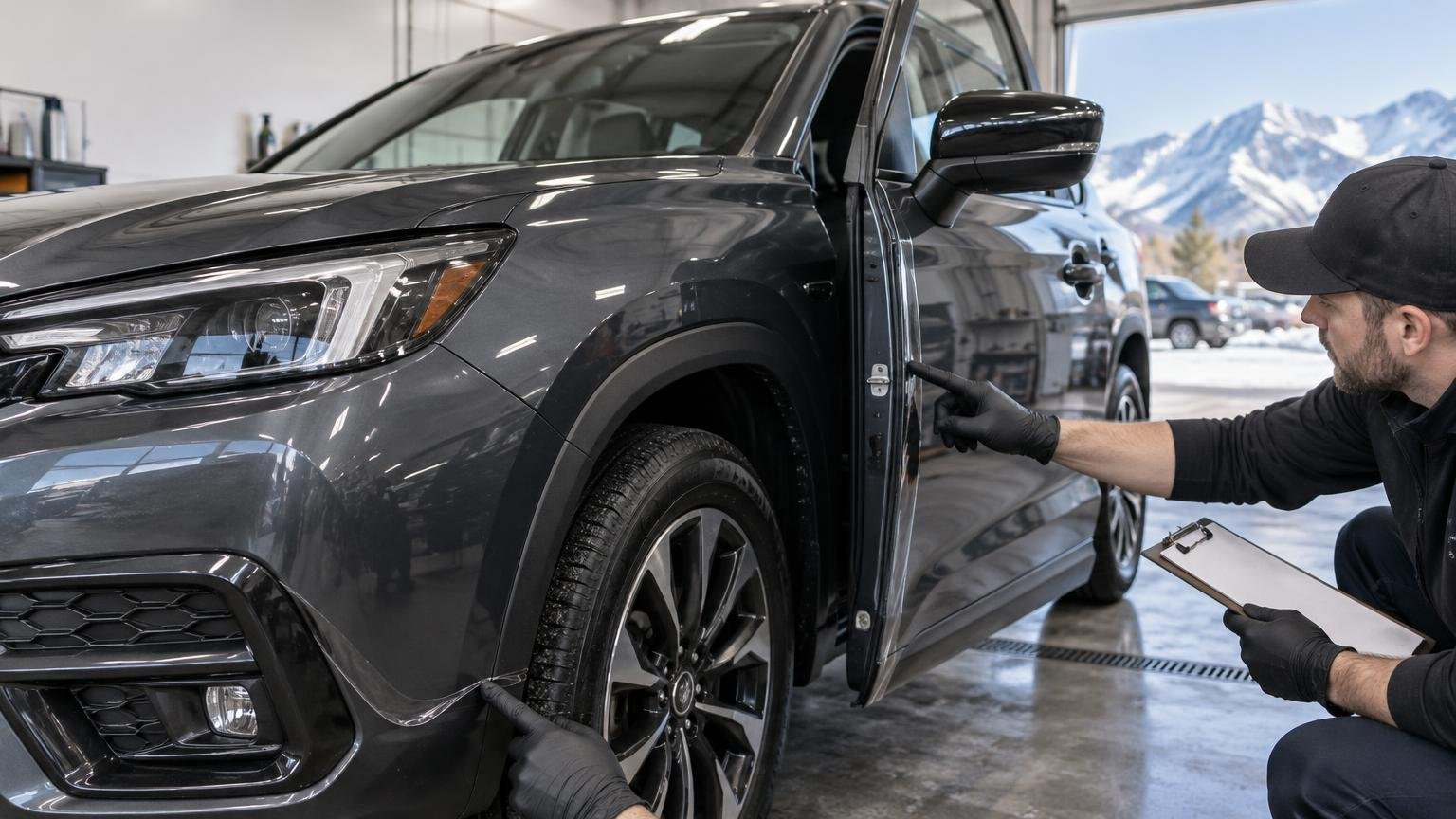
Bring the written scope or annotated diagram when collecting the vehicle. Review each covered panel in good light from normal viewing distance, then look closely at the specified corners, seams, openings, sensors, wheel openings, and trim boundaries. Record both whole-panel views and close-ups, and retain the film information, installation date, coverage description, and warranty documents.
The right question is not, “Does this package have wrapped edges?” Ask, “Which edges on my vehicle will be wrapped, exposed, or seamed, and what prevents a different treatment?” A strong quote will answer that panel by panel. For a Utah daily driver, that clarity makes it easier to compare the real job—not just the package name or total price.