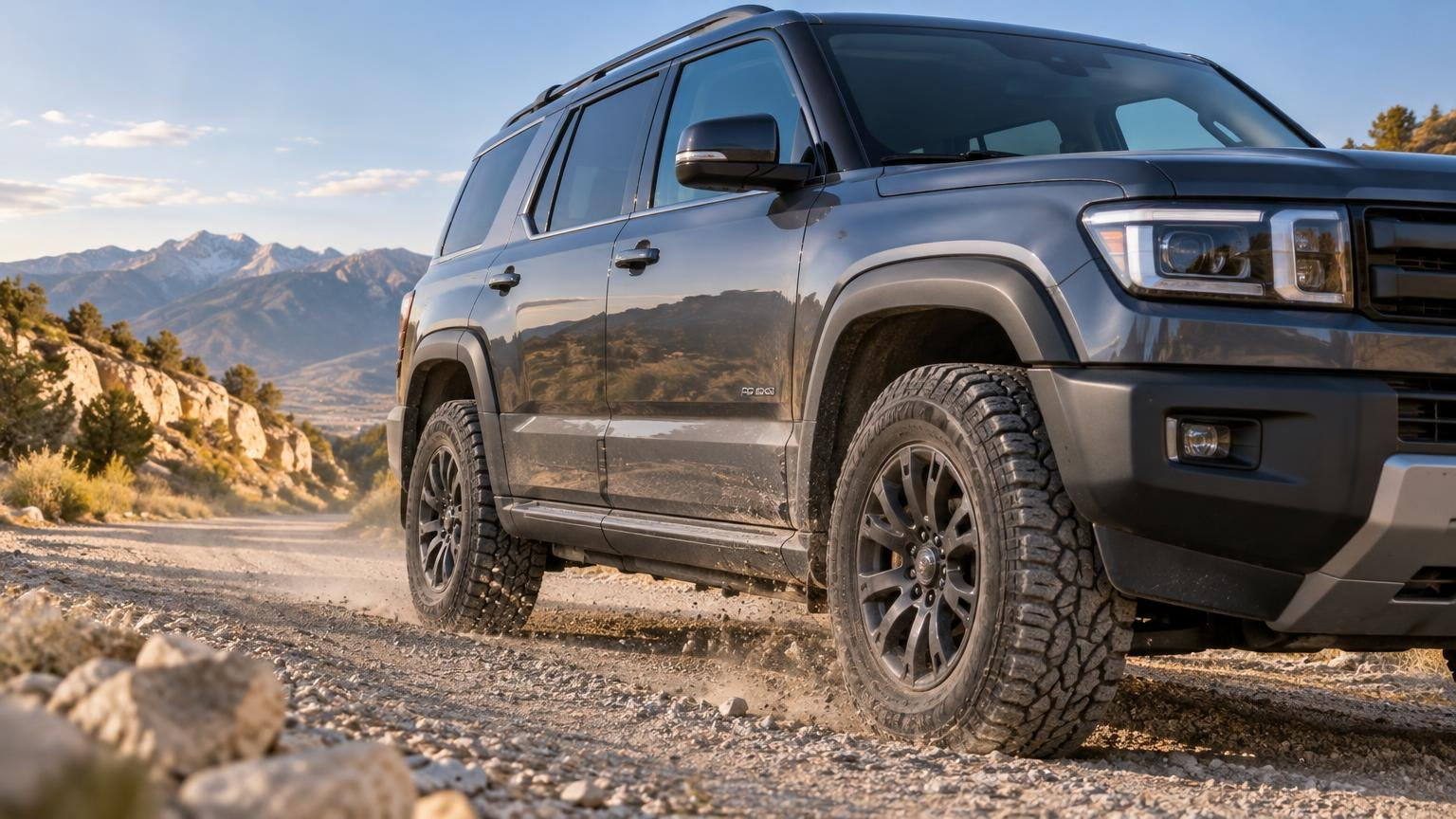
Paint protection film coverage for a Ford Bronco should be chosen from the actual vehicle outward—not from the trim badge inward. A two-door Bronco on factory-size tires with standard flares and compatible splash guards presents a different debris pattern than a four-door Sasquatch build on 35-inch tires. A Bronco Raptor on 37-inch tires is another configuration again.
For most Utah Bronco owners, full-front PPF is the sensible starting point. Add rocker panels, lower doors and rear-wheel impact areas when wide tires, exposed bodywork, gravel access or missing splash guards increase lower-side exposure. Full-body coverage becomes more reasonable when narrow-trail contact and preservation of the outer door and quarter-panel paint matter—but film still does not turn those panels into armor.
TLDR: Match the coverage map to the Bronco
- Confirm that the vehicle is the full-size Ford Bronco, not the separate Bronco Sport.
- Record the model year, two- or four-door body, trim, tire size, wheel offset, fender flares, rails or steps, and splash-guard configuration.
- Start with the bumper, hood, front fenders and mirrors for regular freeway and road use.
- Add rockers, lower doors and paint around the wheel openings for frequent gravel travel or a tire-and-flare setup that throws debris toward the body.
- Consider broader door and quarter-panel coverage for narrow, brushy trails, while recognizing that PPF cannot prevent every branch scratch, dent or hard impact.
- Compare installer quotes only after both shops mark the same panels and coverage boundaries.
First, identify the correct Bronco
This guidance applies to the current full-size Ford Bronco, not the smaller Bronco Sport. Ford’s 2026 lineup includes Base, Big Bend, Outer Banks, Badlands, Heritage, Stroppe Edition and Raptor models. The Raptor is offered only as a four-door.
Body length matters because it changes how much painted side area sits between the front and rear tires. Ford’s current Bronco technical specifications list a 100.4-inch wheelbase for the two-door and a 116.1-inch wheelbase for the four-door. Depending on trim, overall length is approximately 173 inches for the two-door and 189 inches for the four-door.
That does not automatically mean a four-door needs full-body film. It means its lower-side coverage decision includes two door skins, a longer rocker area and more painted surface exposed between the wheel openings. Ask the installer to show where the proposed lower-door and rocker pieces begin and end.
Tires, flares and guards determine the lower-body exposure
Tire diameter is only one part of the picture. Tire width, tread, wheel offset and how far the tire sits relative to the fender flare all influence where gravel, slush and grit may travel. Ford’s 2026 Bronco order guide illustrates how much factory configurations differ: Badlands uses 33-inch-class tires with high-clearance flares, Sasquatch uses LT315/70R17 35-inch rugged-terrain tires with high-clearance suspension and flares, and Bronco Raptor uses 37 x 12.5R17 all-terrain tires with high-coverage flares.
A wider flare can intercept some material that might otherwise leave the tire’s path, but the trim name does not settle the question. Ford Performance describes its Sasquatch flare kit as being designed around oversized wheel-and-tire combinations. Aftermarket wheels, changed offset, replacement flares and wider tires can alter the relationship again.
| Bronco setup | Likely exposure to inspect | PPF starting point |
|---|---|---|
| Mostly stock commuter | Front-facing paint, mirrors and lower front corners | Full front; inspect lower doors before adding them |
| Wide tires or tires near the flare edge | Front rocker ends, lower doors and paint beside wheel openings | Full front plus targeted high-impact side coverage |
| Four-door with regular gravel access | Long rockers, both lower doors and rear-wheel impact areas | Full front plus rockers, lower doors and rear-wheel zones |
| Narrow-trail use | Outer doors, rear quarters and other painted side surfaces | Consider broader side or full-body coverage, subject to film limitations |
| Raptor or substantially modified setup | Vehicle-specific tire wake, flare coverage and exposed lower paint | Inspect and map the actual vehicle rather than buying by package name |
Splash guards can change the recommendation
Do not assume every Bronco can use the same mud flaps. Ford says its molded splash guards for standard-fender-flare Broncos are intended to deflect mud, snow and ice away from lower body panels, but it lists incompatibilities with Sasquatch, rock rails, running boards, side steps, optional flares and several off-road configurations. Ford’s accessory fitment information should be checked against the exact build.
Ford also offers flexible Gatorback-style front guards for some Broncos with rock rails. The company says their lower rubber sections can be removed for additional off-road clearance and that the kit works best with 35-inch tires, but it excludes Raptor and Everglades fitment. Ford’s order guide lists additional package conflicts involving splash guards, Sasquatch and certain steps or running boards.
The buyer-side lesson is simple: “mud flaps included” is not enough information. Confirm which guards are installed, whether all four corners are covered, and whether they remain on the Bronco during trail use. If guards are absent, incompatible or regularly removed for clearance, inspect the rockers and lower doors more critically.
Choose coverage for the way the Bronco is driven
Utah freeway commuting
For a Bronco that spends most of its time on I-15, city streets and paved canyon roads, prioritize the forward-facing surfaces. A full-front package generally covers the bumper, hood, front fenders and mirrors. This addresses a different debris path from material thrown by the Bronco’s own tires.
Lower-side additions may still make sense with wide tires, an aggressive offset or visibly exposed paint behind the front wheels. If the tires sit well inside effective flares and guards, however, do not assume every commuter needs full-body film. Inspect first and spend where the exposure is credible.
Gravel roads and trailhead access
Regular gravel use shifts attention below the beltline. The first areas to inspect are the front ends of the rockers, lower front doors, lower rear doors on four-door models, paint beside the wheel openings and the impact area ahead of or behind the rear tires. Our Utah gravel-road PPF guide explains why full-front film and lower-side film solve related but different problems.
For this driver, I would start by comparing a full-front quote with a high-impact quote that itemizes the rockers, lower doors and rear-wheel zones. Do not compare package names alone. One shop’s “high impact” may include substantially more side coverage than another shop’s version.
Narrow or brushy trail use
Branches and brush create a third exposure pattern. Instead of striking mainly from the front or being thrown from the tires, they can contact the outer doors and rear quarter panels along the length of the vehicle. A four-door has more side area to consider, but the route is what creates the risk; an off-road trim badge by itself does not prove the vehicle will encounter vegetation.
Broader side coverage or full-body PPF may be worthwhile when preserving paint through repeated narrow-trail use is a priority. It should still be purchased with realistic expectations. XPEL says PPF can help with scratches, chips and off-road debris, while also noting that severe-impact damage may not be completely prevented and that its warranty excludes damage caused by outside forces and physical rock or debris impacts. XPEL’s PPF guidance therefore should not be read as a promise that film is branch-proof or impact-proof.
Film may take a light scrape that otherwise reaches paint. It cannot guarantee protection against a stiff branch dragged under pressure, a sharp object that cuts through the film, body deformation, or a rock that hits with enough force to dent the panel. Rock rails, bumpers and skid plates serve different purposes and should not be treated as substitutes for PPF—or vice versa.
Build the quote from a vehicle inspection
Ford documents numerous interactions among tire packages, body parts, graphics, splash guards and appearance options. That makes a walk-around more useful than ordering from the word “Badlands” or “Sasquatch” alone. Before requesting a quote, photograph each side from wheel height and collect the following details:
- Model year and confirmation that it is a full-size Bronco rather than a Bronco Sport
- Two-door or four-door body
- Trim and factory option packages
- Current tire size, not merely the factory size
- Factory or aftermarket wheels and known offset
- Fender-flare type and how far the tire sits relative to it
- Front and rear splash guards, including whether they are removed for trails
- Rock rails, running boards, side steps or other parts affecting film access
- Factory graphics, matte surfaces or existing film
- Current chips, scratches, touch-up paint and repainted panels
- Typical split among commuting, gravel access and narrow-trail driving
Ask the installer to mark the proposed coverage on those photos. For lower doors, clarify whether the film is a narrow strip, a larger lower section or the entire door skin. For rockers and wheel openings, ask where seams will sit and whether the pattern works around rails, flare edges and removable parts.
A practical Bronco coverage recommendation
For a mostly paved Utah Bronco, begin with full-front coverage and inspect the lower body based on the actual tire-to-flare relationship. For frequent gravel access, add rockers, lower doors and rear-wheel impact zones where the tire path supports it; the available high-impact PPF coverage options provide a useful comparison point. For repeated narrow-trail use where side-paint preservation matters, compare broad side coverage with full-body PPF.
The deciding question is not whether the Bronco looks trail-ready. It is where debris and contact will reach this specific two- or four-door vehicle with its current tires, wheels, flares and guards. Normalize that map before comparing prices, and the quotes will finally describe the same job.
References
- 2026 Ford Bronco Models & Trims | Build & Price Your CROSSOVER SUV
- 2026 Ford Bronco Order Guide
- www.fromtheroad.ford.com
- 2026 Ford Bronco Tech Specs
- BRONCO FENDER FLARE KIT – SASQUATCH| Part Details for M-9164-BFK | Ford Racing Parts
- Bronco 2021-2026 Molded Splash Guard Rear Set | Accessories | Ford.com
- Bronco 2021-2026 Gatorback Bucking Bronco Logo Splash Guard Front Set | Accessories | Ford.com
- PPF Packages Utah – Utah PPF
- Frequently Asked Questions (FAQs) – XPEL Support