Yellowing, staining, and cloudy PPF can look similar in a photo, but they should not be treated as the same condition. Before replacing the film, establish where the change appears, document its history, use only care methods approved for the installed product, and ask the installer to inspect it. A photograph can record the symptom; it usually cannot establish whether the issue is surface contamination, damage, or a change within the film. Manufacturer warranty processes rely on documentation and installer or manufacturer review rather than an owner’s photo alone.
Start by mapping the affected area
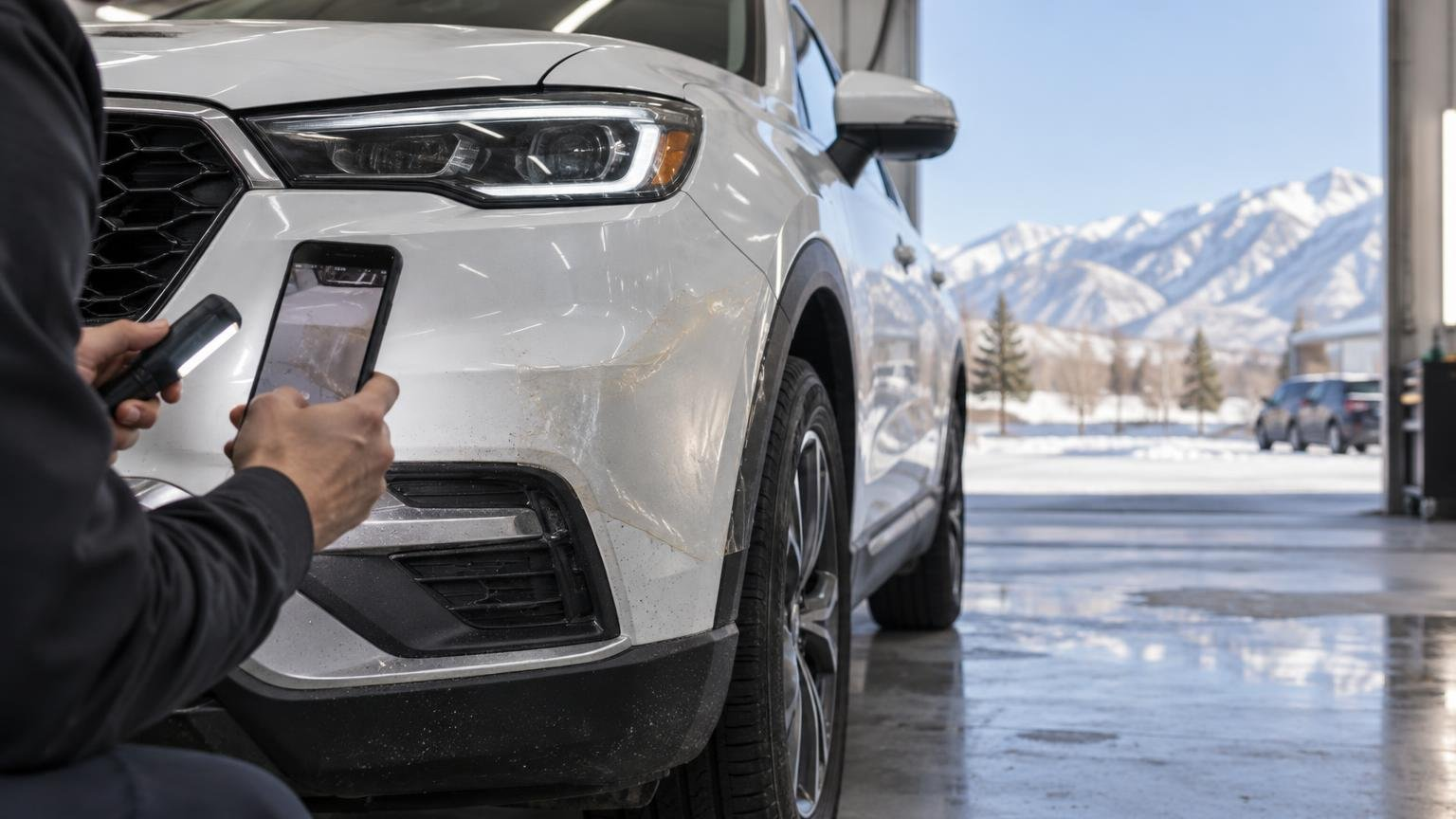
The first useful question is not “Has my PPF failed?” It is “Exactly how much film looks different?” Inspect the vehicle when it is clean and dry, preferably in even daylight. Look at the film from several angles and compare it with nearby covered and uncovered paint.
- Identify whether the change affects one small spot, part of a panel, an entire panel, several matching panels, or every filmed surface.
- Write down the exact locations, such as the upper bumper, lower hood, driver-side rocker, mirror cap, or edge behind a wheel.
- Record whether the appearance is yellow, brown, gray, milky, hazy, spotted, streaked, or uneven.
- Note when you first noticed it and whether it appears stable, is spreading, or changes after an ordinary wash.
- Take a full-vehicle photo, a panel-level photo, close-ups from several angles, and a comparison photo of an unaffected area.
This scope can help the installer assess patterns. One isolated mark may lead to different questions than equal discoloration across every protected panel, but the pattern itself is not a diagnosis.
Separate what you observe from what you assume
Describe the visible condition without assigning a cause. “Milky patch near the hood edge” is more useful than “the adhesive failed.” Likewise, “yellow tint across the entire bumper film” is a better starting point than declaring a warranty defect before inspection.
| What you observe | What to document | What it does not prove |
|---|---|---|
| Spots or rings | Shape, location, wash history and whether they remain after approved cleaning | That the film itself has yellowed or failed |
| A localized stain | Nearby bug residue, sap, tar, road grime or other known exposure | That a particular contaminant caused permanent damage |
| Cloudiness or haze | Lighting conditions, viewing angles and whether the whole panel is affected | Whether the condition is on the surface, within the film or beneath it |
| Broad yellowing | All affected panels, installation date and comparison areas | That the condition qualifies for warranty replacement |
Manufacturer materials distinguish covered defect categories from conditions such as mineral deposits, abrasion, chemical exposure and improper care. XPEL, for example, identifies water spots as mineral deposits left when water dries on PPF and states that water spots are not covered under its warranty. That is one reason to document the symptom carefully instead of using “yellowing,” “staining” and “cloudiness” interchangeably.
Clean cautiously before requesting an assessment
Current 3M paint protection film guidance calls for soft wash methods, advises against abrasive pads, brushes, rubbing compounds and abrasive polishes, and warns against directing high-pressure water at film edges. It also cautions that strong alkaline, acidic or alcoholic cleaners can permanently damage PPF. Product-specific instructions can differ, so ask the installer before attempting any spot treatment beyond the approved routine wash.
For ordinary ownership practices, use the film manufacturer’s directions alongside this guide to caring for paint protection film in Utah. Winter brine, grit and road grime make regular washing useful, but extra chemical strength is not automatically better.
Build the film and exposure history
An installer can give a more useful assessment when the condition arrives with a timeline. Gather the original invoice or receipt, installer name, installation date, film manufacturer, product series, finish and the exact panels included in the job. If you have a warranty card or registration confirmation, include it.
Also list anything that may have changed the surface or its exposure:
- Ceramic coatings, sealants, waxes or other products applied over the PPF
- Detailing, polishing, paint correction or body repairs completed after installation
- Automatic car-wash use or pressure-washing near film edges
- Known contact with bug residue, bird droppings, tar, tree sap, hard water or road-treatment grime
- Cleaners or spot treatments used, including the product name and approximate date
- Long periods of outdoor parking, strong sun or heat exposure
- The date the condition first appeared and any visible change since then
3M advises prompt cleaning of contaminants such as bugs, bird droppings and tar, as well as shaded or covered storage where practical to reduce heat and ultraviolet exposure. These details can inform an assessment, but they do not establish the cause by themselves.
Check the exact warranty, not a generic PPF promise
Warranty coverage depends on the product that was actually installed. The current 3M PPF warranty card lists 10-year coverage against specified yellowing, bubbling and cracking for certain Scotchgard Paint Protection Film Pro Series 200 Gloss and Matte products and 3M Paint Protection Film Series 100 Gloss. SunTek publishes five-year limited coverage for professionally sold and installed PPF C and PPF M and 10-year limited coverage for PPF Ultra against specified cracking, bubbling or yellowing categories. SunTek’s current product and warranty information should be checked against the installed series.
XPEL also lists yellowing, cracking, blistering and delamination among covered defects for applicable products, subject to the controlling product warranty and its exclusions. Its process calls for a written defect description and proof identifying the installed areas. XPEL’s warranty information directs the owner to provide notice and documentation through the authorized installer.
The warranty term alone does not decide the claim. Eligibility can depend on the product, installation date, installer status, records, maintenance, exclusions and the condition found during review.
What to send the installer
Send one organized message rather than a series of disconnected close-ups. Include enough context for the shop to identify the job and decide whether an in-person inspection is needed.
- Your name, vehicle year, make and model, plus the VIN if requested
- Installation date, installer and invoice or receipt
- Film brand, product series and finish, if known
- The original coverage map or a list of protected panels
- A short description of the appearance and when it began
- Photos showing the vehicle, affected panel, close-ups, multiple angles and an unaffected comparison area
- Cleaning, detailing, coating, repair and exposure history
- A list of products already used on the affected area
- A copy of the warranty card or registration record, if available
3M’s published warranty process starts with the installer and calls for product and installation records. XPEL similarly requests written notice, proof of purchase or warranty documentation, identification of the covered areas and a description of the defect.
When replacement becomes the right question
Replacement becomes a practical question after inspection indicates that the film is damaged, no longer has an acceptable appearance, or may meet a covered defect category under the applicable warranty. It may involve one section or panel rather than every piece of PPF on the vehicle.
Ask the installer to explain what was observed, whether further manufacturer review is required, which pieces would be removed, and whether adjacent film is likely to look different because of age or exposure. If the claim is accepted, confirm what the warranty covers, including whether it addresses film, labor or both. If it is not covered, request a written replacement scope so you can compare the cost of the affected panel with a broader refresh.
For a Utah vehicle exposed to freeway grime, winter road treatment or gravel access, the sensible sequence is simple: document the condition, clean only according to the correct product guidance, collect the installation and care history, and schedule an inspection. That gives the installer useful evidence while avoiding a chemical remedy that could make the film harder—or more expensive—to evaluate.
Frequently Asked Questions
Can a photo show why PPF has turned yellow or cloudy?
A photo can document the location and appearance, but it usually cannot establish whether the change is surface contamination, damage, or a condition within the film. Installer or manufacturer review is the next step.
How should I document discolored PPF?
Record whether it affects one spot, part of a panel, several panels, or all installed film. Photograph the clean, dry vehicle, the affected panel, close-ups from multiple angles, and an unaffected comparison area.
Should I clean cloudy or stained PPF before an inspection?
Use only the routine cleaning method approved for the exact film product. Avoid unapproved solvents, abrasive pads, rubbing compounds, polishes, and strong chemical cleaners that could damage the film or alter the condition being assessed.
What information should I send the installer?
Send the invoice, installation date, installer name, film brand and series, finish, covered panels, warranty records, photos, and a brief history of cleaning, coatings, repairs, detailing, and known exposures.
Does broad yellowing automatically qualify for warranty replacement?
No. Coverage depends on the installed product, its warranty terms, documentation, maintenance, exclusions, and what the installer or manufacturer finds during review.
Do all PPF products have the same warranty term?
No. Current manufacturer materials list different terms by product series. Certain 3M products carry specified 10-year coverage, while SunTek lists five-year coverage for PPF C and PPF M and 10-year coverage for PPF Ultra.
Are water spots the same as film yellowing?
No. XPEL describes water spots as mineral deposits left when water dries on PPF and states that they are not covered under its warranty. That is why the visible symptom should be documented without assuming the cause.
When should PPF replacement be discussed?
Discuss replacement after inspection indicates that the film is damaged, looks unacceptable, or may fall within a covered warranty category. The appropriate scope may be one section or panel rather than every filmed surface.